Hey there, fellow productivity enthusiasts! Ever felt like there just aren’t enough hours in the day to get everything done? Worry no more because we’ve got a solution that might just revolutionize your approach to getting things done: time blocking. Let’s dive right into how structured scheduling can be your new best friend when it comes to maximizing productivity.
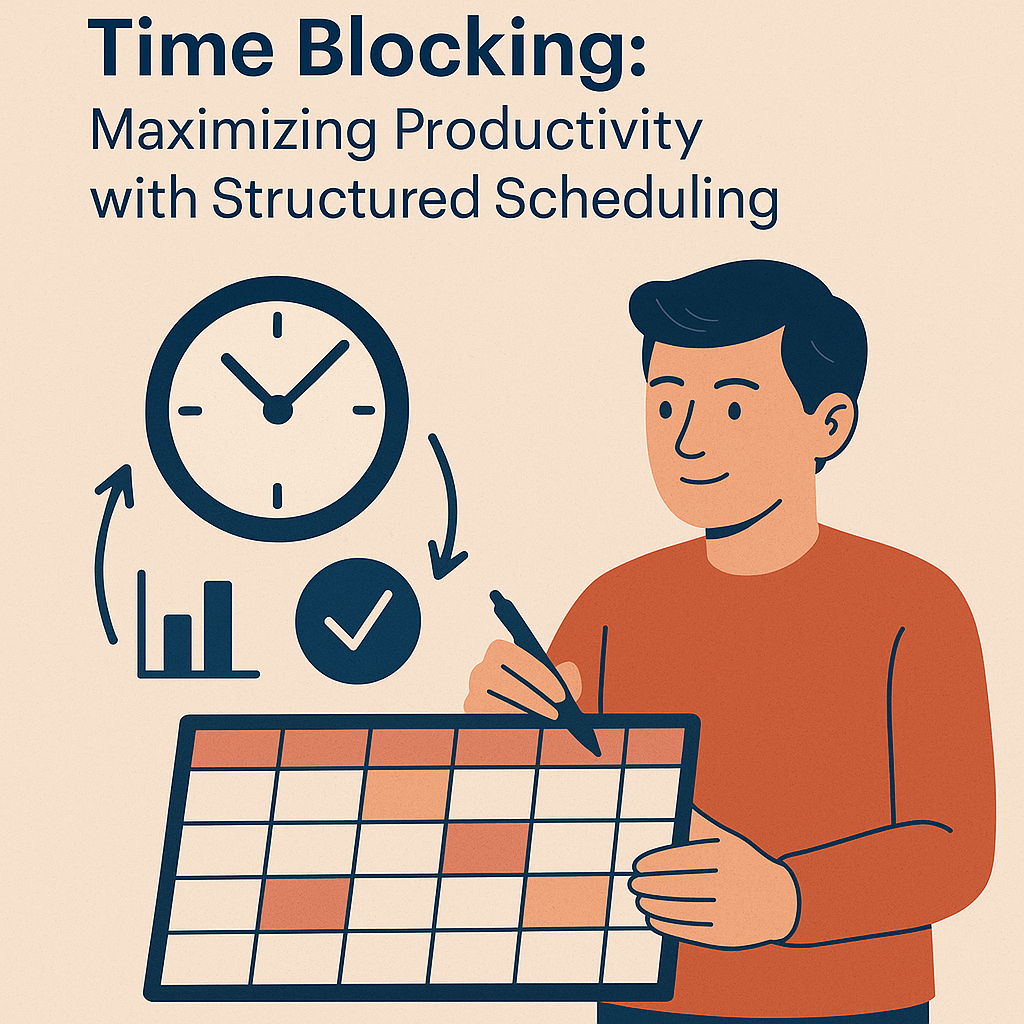
Picture this: your calendar isn’t just a list of events and deadlines—it’s a finely tuned machine, strategically organized to make every minute count. Time blocking is the art of dividing your day into chunks of time, each dedicated to specific tasks. This method allows you to take control of your day, reducing stress and increasing efficiency.
But why is time blocking so effective? It all comes down to how our brains work. We’re wired to focus on one thing at a time, which means when we switch tasks too frequently, we lose precious time getting back into the groove. By blocking out certain hours for specific tasks, you minimize these disruptions and create a flow that helps you maintain your focus and productivity.
Here’s how you can start implementing time blocking in your daily routine:
- Set Clear Goals: Know what you want to achieve each day. Without clear goals, your time blocks might end up being unproductive. Start with your top priorities and then map out how you’ll tackle them throughout the day.
- Plan Wisely: Allocate time blocks for various tasks—work, personal errands, relaxation, and hobbies. This might mean waking up earlier or staying late, but it’s worth it to ensure you have blocks of uninterrupted time for each activity.
- Stick to Your Schedule: Once you’ve planned your day, stick to it! It takes discipline, but over time, this habit will become second nature. Remember, flexibility is key—if an unforeseen event pops up, adjust your schedule accordingly.
- Reserve Time for Flexibility: Although rigid planning is the backbone of time blocking, keep some segments unassigned. This buffer allows you to handle unexpected tasks without disrupting your entire day’s structure.
- Reflect and Adjust: At the end of each day, reflect on how your time blocks worked out. Did you accomplish what you set out to do? If not, why not? Use this feedback to adjust your schedule for the next day.
By now, you might be thinking, “Isn’t this just another ‘to-do’ list?” But fear not, it’s much more than that. Time blocking is about commitment to each block of time and letting go of multitasking to embrace deep work—those moments when you’re fully immersed in what you’re doing. It’s about giving every task the attention it deserves.
Moreover, time blocking can help you understand how long tasks truly take, helping to eliminate procrastination. You’ll see that some tasks you thought would take hours can actually be completed in much less time, freeing up your schedule for more productive activities.
So, are you ready to schedule your way to productivity nirvana? With time blocking, you have the power to reclaim your day from the chaos of constant interruptions and meetings. It’s about creating space for meaningful work and personal time, ensuring that you’re not just busy but effective.
Try it out and see the difference for yourself.
 Pickett Applied Technologies Laboratories
Leave a comment