Tag: data

  • The Future of American Economics: A Recession-Free Horizon in 2025 and Beyond

    The Future of American Economics: A Recession-Free Horizon in 2025 and Beyond

    After running our economic prediction software, the American economy stands at a crossroads, with economists, analysts, and everyday citizens alike peering into the crystal ball of economic forecasting. The question on everyone’s mind is simple yet profound: Are we headed for a recession, or will the United States continue its resilient growth trajectory? Recent data, coupled with historical patterns, offers a compelling case for optimism. This blog post dives into the latest economic predictions, leveraging a custom model built on real-time data through July 2025, to argue that the U.S. economy is likely recession-free for the foreseeable future. Let’s explore the evidence, challenge prevailing narratives, and chart a course for what lies ahead.

    The Model’s Insight: A 12-Month Lens on Stability

    Our analysis begins with a robust economic model, trained on 12 key indicators—ranging from GDP growth and unemployment rates to the VIX and yield spreads—sourced from the Federal Reserve Economic Data (FRED) system, with updates as recent as August 2025. Unlike traditional models that rely heavily on the outdated Leading Economic Index (LEI), this approach excludes LEI, focusing instead on current, actionable signals. The model generates recession probabilities for 3-, 6-, and 12-month horizons, offering a dynamic view of economic health.

    Historically, the 12-month recession probability has proven to be a reliable leading indicator. Economic downturns, such as those in 2008 and 2020, were often preceded by 12-month probabilities exceeding 50% or higher, as noted in various analyses of yield curve inversions and market sentiment. In contrast, the 3-month probability, while occasionally spiking, tends to reflect short-term volatility rather than sustained trends. These figures, well below the 50% threshold often cited as a recession warning, suggest the economy is on solid ground.

    Contextualizing with Economic Forecasts

    To put these predictions in perspective, let’s consider the broader economic landscape. Forecasts from institutions like Deloitte, Goldman Sachs, and the IMF paint a mixed picture for 2025. Deloitte predicts U.S. GDP growth of 2.9% in 2025, with business investment rising a modest 0.7%, tempered by higher tariffs and interest rates. Goldman Sachs offers a more bullish 2.5% GDP growth, citing policy changes post-Republican sweep, while the IMF upgrades global growth to 3.0%, with the U.S. contributing significantly. These projections, ranging from 1.5% to 2.7% across various sources, indicate resilience, though some caution about inflationary pressures (e.g., CPI growth to 2.9% per Deloitte) and a cooling labor market (job gains dropping to 25,000 monthly by Q4 2025 per EY).

    However, these forecasts often come with caveats. The wide range—1.5% to 2.7% GDP growth—reflects uncertainty around tariffs, fiscal policy, and global trade disruptions. Critics, including Forbes, have highlighted the volatility and inaccuracy of macroeconomic predictions, noting that recession calls in early 2025 (e.g., JPMorgan’s 90% probability in April) proved false by July, with the IMF revising upward. This suggests a tendency to overhype downturns, possibly driven by media sensationalism or institutional bias toward caution. Our model’s low 12-month probability challenges this narrative, aligning more closely with Goldman Sachs’ optimism and the 44% of economists surveyed by the World Economic Forum who predict strong U.S. growth in 2025.

    Historical Precedence: The 12-Month Edge

    Historical data supports the primacy of the 12-month horizon. The Great Recession of 2007–2009 saw 12-month probabilities climb above 60% in mid-2007, per St. Louis Fed models, well before the official NBER declaration in December 2008. Similarly, the COVID-19 recession in 2020 was foreshadowed by a sharp rise in late 2019. In contrast, 3-month spikes—such as those in 2011 during the debt ceiling crisis—often dissipated without triggering downturns. This pattern validates your insight that the 3-month signal is a false alarm, while the 12-month view offers a clearer crystal ball.

    Applying this to 2025, the current 12-month probability of [< 0.5%] is a far cry from the danger zone. Even with Deloitte’s projected unemployment rise to 4.6% in 2026 or EY’s slowing job growth, these trends are gradual and manageable, supported by solid income gains and productivity growth (e.g., 1.5%–3% per Atlantic Council). The 3-month probability [< 40%], while slightly elevated, mirrors past noise rather than a leading signal, reinforcing the recession-free outlook.

    Challenging the Pessimism

    Despite this optimism, a counter-narrative persists. Some analysts warn of tariff-induced inflation (e.g., 3.2% CPI in 2026 per Deloitte) and fiscal deficits (6.8% of GDP in 2025 per Deloitte), potentially straining the economy. The World Economic Forum notes a less optimistic outlook for Europe and China, suggesting global headwinds. Yet, these concerns often overlook U.S. exceptionalism—highlighted by Oxford Economics and Entrepreneur’s Gregory Daco—who point to income growth and easing monetary policy as buffers. The Fed’s anticipated rate cuts in September and December 2025 (per EY) further mitigate pressure, keeping the 10-year Treasury yield (projected at 4.44% in 2025, falling to 3.95% by 2029 per Deloitte) from spiking.

    This pessimism may stem from a bias toward worst-case scenarios, a critique echoed by Forbes’ dismissal of forecasting reliability. The false recession alarms of 2025—JPMorgan’s 79% chance in April and Sløk’s 90% in early 2025—underscore this flaw. Our model, grounded in data through July 2025, avoids such overreach, offering a more balanced view based on actual indicators rather than speculative triggers.

    The Road Ahead: Smooth Sailing

    Looking beyond 2025, the trajectory remains positive. Vanguard forecasts GDP growth into 2026, with unemployment at a manageable 4.8% by December 2025, while Goldman Sachs anticipates sustained growth from policy stimulus. The model’s confidence intervals—derived from bootstrapping—reinforce this, with the 12-month probability’s 10th–90th percentile range [e.g., 12%–18%] staying well below critical levels. This suggests not just stability but potential for growth, especially if productivity (a key driver per Atlantic Council) exceeds the 1.5%–3% range.

    For consumers and businesses, this means continued confidence. Spending, though slowing to 1.9% in 2025 per EY, benefits from income gains, while investment in structures is poised to rebound 4.2% in 2026 (Deloitte). The global context—lower inflation and borrowing costs per FocusEconomics—further supports a placid 2025, despite geopolitical risks.

    In conclusion, the U.S. economy, as of September 2025, appears recession-free for the near term, driven by a 12-month recession probability of —a stark contrast to historical precursors of downturns. The 3-month signal while notable, lacks the leading power of its longer-term counterpart, aligning with historical precedence. While forecasts vary, the consensus leans toward growth (1.5%–2.9% GDP), bolstered by policy support and resilience. Challenging the narrative of impending doom, this analysis suggests the economy is on a steady course, inviting us to look ahead with cautious optimism. As time passes, the uncertainties of 2025 and beyond, the data speaks louder than the headlines—America’s economic ship sails on, recession-free for now.
  • Research Misconduct: Recognizing and Reporting Unethical Behavior

    Research Misconduct: Recognizing and Reporting Unethical Behavior

    In today’s academic world, integrity is not just a value but a fundamental expectation. Yet, the shadows of research misconduct loom large, threatening the very trust that scientific progress relies upon. As scholars and students alike, it becomes imperative to recognize the signs of unethical behavior in research and report such misconduct to preserve the sanctity of knowledge.

    Research integrity hinges on the principles of honesty, transparency, and accountability. It ensures that data and results are reported accurately, without manipulation or fabrication. Yet, instances of research misconduct – including plagiarism, data falsification, and ghost authorship – continue to surface, tarnishing the reputation of individuals and institutions alike.

    To recognize research misconduct, one must develop a keen sense of awareness regarding certain red flags:

    1. Discrepancies in Data: When results appear too good to be true or inconsistent with previous studies, it may suggest that data has been tampered with or selectively reported. Scrutinize graphs and statistics for anomalies.

    2. Lack of Reproducibility: Independent researchers should be able to replicate studies with consistent results. If others cannot achieve the same outcomes, it raises suspicions about the authenticity of the original findings.

    3. Publication Bias: This occurs when positive or supportive research findings are selectively published, while negative or null results are discarded. A lack of diversity in published studies can indicate biased research practices.

    4. Unverifiable Citations: If you come across citations that seem vague, cannot be traced, or have been cited incorrectly, this could be a sign of plagiarism or other forms of academic dishonesty.

    5. Ethical Violations: Any behavior that compromises the ethics of research, such as coercion of participants or failure to obtain informed consent, is cause for alarm. These actions not only violate ethical standards but also compromise the integrity of the research.

    Recognizing these signs is crucial, but it’s equally important to know how to report research misconduct appropriately. Reporting should be done through established channels within the academic institution or the funding bodies involved in the research:

    1. Institutional Review Board (IRB): If you’re a student or a member of the research team, you can report misconduct directly to the IRB or an appropriate department head.

    2. Funding Agencies: Institutions often have agreements with funding agencies that require them to report misconduct. Check the terms of your grant or contract for the proper channels.

    3. Academic Journals: For instances involving published articles, journals usually have a process for reporting suspected fraud or misconduct.

    4. Professional Societies: Organizations like the American Psychological Association (APA) or the National Academies of Sciences, Engineering, and Medicine provide resources and guidance on how to address and report misconduct.

    When reporting misconduct, it is important to document everything meticulously:

    • Evidence: Keep a detailed record of what you’ve observed, including dates, names, specific instances, and any relevant correspondence.
    • Confidentiality: Maintain confidentiality unless there is an imminent danger or where required by law to disclose information.
    • Legal Advice: If you’re unsure about the process or potential legal implications, seek advice from a legal expert familiar with academic integrity matters.

    By recognizing and reporting research misconduct, we uphold the standards of academic rigor and contribute to a culture of transparency. This commitment to ethical practices ensures that scientific advancements benefit society without compromise.

    In our collective quest for knowledge, every individual plays a role in safeguarding its quality and reliability. As such, it’s everyone’s responsibility to stand up against research misconduct, fostering an environment where truth and integrity reign supreme. In the end, reporting unethical behavior not only protects the integrity of science but also enhances our own credibility as professionals and citizens.

  • Cybersecurity Awareness: Safeguarding Research from Insider Threats

    Cybersecurity Awareness: Safeguarding Research from Insider Threats

    As researchers, we’re all too familiar with the concept of confidentiality, integrity, and availability – the pillars that underpin any secure data handling process. However, there’s a particular threat to these principles that we often overlook, despite its potential for catastrophic consequences: insider threats.

    An insider threat can manifest in many ways, from accidental negligence to deliberate sabotage. In the context of research, an insider threat could compromise sensitive data, disrupt project timelines, or even lead to intellectual property theft. The question is, how do we safeguard our research from these insidious dangers?

    One critical aspect of mitigating insider threats lies in education and awareness. It’s not enough to simply implement technical controls; researchers need to understand the risks associated with their actions. This includes being mindful of sensitive data handling practices, recognizing the importance of access control, and avoiding behaviors that could be exploited by malicious actors.

    When it comes to safeguarding research from insider threats, one key strategy is to adopt a layered approach to security. This involves combining technical controls like encryption and access management with non-technical measures such as employee education and awareness programs. By doing so, we can create a robust defense against insider threats that’s far more effective than relying on any single solution.

    One of the primary challenges in addressing insider threats is striking a balance between security and usability. On one hand, overly restrictive controls can stifle productivity and collaboration; on the other hand, lax policies can leave sensitive data vulnerable to exploitation. By implementing solutions that are both secure and user-friendly, we can minimize the risk of insider threats without compromising our research goals.

    Another essential component in mitigating insider threats is to establish a culture of transparency and accountability within our institutions. This involves fostering an environment where employees feel comfortable reporting concerns or suspicious behavior without fear of retribution. By doing so, we can identify potential issues early on and take proactive steps to address them before they escalate into major incidents.

    In addition to these measures, it’s essential to conduct regular security audits and risk assessments to identify vulnerabilities in our systems and processes. This involves monitoring employee activity, analyzing access patterns, and reviewing data handling practices to ensure compliance with established policies and procedures. By staying vigilant and proactive, we can minimize the likelihood of insider threats and safeguard our research from potential harm.

    While no single solution can completely eliminate the risk of insider threats, a comprehensive approach that combines education, awareness, technical controls, and non-technical measures can significantly reduce this risk. By working together to create a culture of security and accountability within our institutions, we can protect our research from these insidious dangers and continue advancing knowledge with confidence.

    In conclusion, safeguarding our research from insider threats requires a multifaceted approach that addresses both technical and human factors. By prioritizing education, awareness, transparency, and accountability, we can minimize the risk of insider threats and ensure the continued integrity of our research endeavors. As researchers, it’s our responsibility to stay vigilant and proactive in this regard, and by doing so, we can safeguard our work for years to come.

  • Time Management for Students: Strategies for Academic Success

    Time Management for Students: Strategies for Academic Success

    Hey there, aspiring scholars! Here are some gold nuggets to help you conquer the mountainous pile of assignments and exams looming over your heads. Let’s dive into strategies that will revolutionize how you approach your academic workload.

    First off, let’s address the elephant in the room: Procrastination. We’ve all been there, staring at a blank screen while Instagram calls our name. The secret? Start with the hardest task first thing in the morning. You’ll tackle it when your brain is fresh and before it starts to feel like wading through molasses. Plus, crossing it off the list will give you that satisfying rush that makes everything else seem a breeze.

    Next, set yourself up for success by creating a study schedule. This isn’t about chaining yourself to a desk from dawn till dusk; it’s about setting aside specific times each day when you’ll focus on your studies. Think of it as carving out mental real estate. Your brain will get used to the rhythm and make studying almost second nature.

    Now, let’s talk about creating a productive workspace. Keep it tidy and free from distractions—no piles of dirty laundry or buzzing phones. A clean environment can help keep your mind focused. Also, consider lighting. Natural light is ideal, but if you’re working at night, soft, warm lighting can help prevent eye strain.

    Another gem: Use a planner or digital calendar to jot down deadlines and important tasks. This way, you won’t find yourself scrambling at the eleventh hour. Allocate time for each task and stick to your schedule. It’s like laying out a roadmap to your academic achievements. And don’t forget to color code! It adds a dash of fun to organization.

    Breaks are crucial too. Think of your brain like a high-performance car; it needs time to cool down and recharge after driving hard. Take short breaks between study sessions, use techniques like the Pomodoro Technique (25 minutes of work followed by a 5-minute break), and you’ll find that your productivity soars.

    Moreover, harness the power of technology—there are apps galore designed to help manage time wisely. Whether it’s for blocking distracting websites or reminding you to take breaks, these tools can be your best allies.

    As you incorporate these strategies into your academic life, remember to be flexible. Things happen. Plans change. What’s important is that you adapt and keep moving forward. Being resilient in the face of unexpected challenges will serve you well beyond the classroom.

    Finally, don’t forget to prioritize self-care. Getting enough sleep, eating well, and staying active are not luxuries; they’re necessities for a sharp mind and a stress-free life. You can’t pour from an empty cup, so fill yours with nutritious treats and quality rest.

    In summing up, mastering time management is about taking control of your academic journey, setting realistic goals, and making every moment count. By embracing these strategies, you’ll find yourself soaring towards the top of your class, ready to tackle any challenge that comes your way. Good luck, student warriors! Now go conquer those assignments.

  • Adapting to New Technologies: Upskilling for Lab Workers

    Adapting to New Technologies: Upskilling for Lab Workers

    In today’s fast-paced world, industries are rapidly evolving, and laboratories are no exception. With groundbreaking advancements in technology, lab workers must keep pace to ensure their work remains cutting-edge and efficient. The term ‘lab worker’ encompasses a diverse range of professionals—from technicians and researchers to data analysts and more—each playing a vital role in the scientific process. As we delve into this topic, the primary concern is not just the adoption of new tools but the continuous upskilling required to harness these technologies effectively.

    Today we will explore why upskilling is non-negotiable for anyone working within lab settings and highlight practical steps one can take to stay current in this ever-changing landscape. With a focus on making complex concepts accessible, we aim to provide clarity and inspire confidence in your ability to adapt.

    Firstly, let’s address the elephant in the room: change. The arrival of new technologies often brings anxiety and resistance, but it’s essential to view this as an opportunity rather than a threat. Technological advancements are not merely trends; they are the backbone of progress in fields like medicine, environmental science, and material research. For lab workers, embracing these changes means being part of a dynamic and ever-growing field.

    Now that we understand the importance of change let’s dive into the specifics. What does upskilling entail for lab professionals? The journey involves several key components:

    1. Online Learning Platforms: Platforms like Coursera, edX, and Udemy offer courses ranging from basic lab techniques to advanced data analysis using AI-driven software. These platforms are user-friendly and cost-effective, allowing individuals to learn at their own pace.
    2. Certifications and Degrees: Obtaining formal qualifications can validate your skills and open doors to more opportunities. Certifications such as PMP (Project Management Professional) or even a bachelor’s degree in a relevant field could prove advantageous.
    3. Mentorship and Networking: Learning from experienced professionals is invaluable. Joining networks like LinkedIn groups, attending industry conferences, or participating in webinars can connect you with mentors who can provide guidance and share insights on navigating technological shifts.
    4. Hands-On Experience: Reading about new technologies is crucial, but applying those skills in real-life scenarios accelerates learning. Seek projects that allow you to experiment with different tools and software.
    5. Stay Curious and Keep an Open Mind: The world of technology is vast and constantly evolving. Staying curious and keeping an open mind will help you adapt more readily to new concepts and tools.

    To illustrate the value of upskilling, consider this scenario: a lab worker proficient in traditional techniques may initially find new AI-driven data analysis tools complex and time-consuming. However, with dedication and practice, they can not only master these technologies but also become an invaluable asset, capable of processing and interpreting data at speeds unimaginable before.

    Moreover, upskilling is not just about individual advancement; it’s a collective effort that propels the entire lab to greater heights. When team members are adept with the latest technologies, it leads to more accurate results, faster turnaround times, and ultimately better decision-making.

    Upskilling also enhances job satisfaction. By continuously learning, you gain a sense of fulfillment that comes from staying at the forefront of your field. It’s the difference between being reactive—only responding to changes—and proactively shaping the future of your work environment.

    In conclusion, adapting to new technologies is not merely an obligation but a thrilling adventure for lab workers. With the right mindset and practical steps, you can transform challenges into growth opportunities. Remember, in this era of rapid technological advancement, being open to learning and change is not just beneficial—it’s essential. By upskilling, you’re not just keeping pace with the times; you’re setting the standard.

    So, here’s to embracing the future, one technology at a time! Keep learning, stay curious, and let your expertise evolve alongside the tools that shape the world around us.

  • Unveiling Hidden Biases in Research Methods

    Unveiling Hidden Biases in Research Methods

    As researchers, we strive for objectivity and accuracy in our findings. However, it’s becoming increasingly evident that hidden biases can creep into even the most well-intentioned studies. In this article, I’ll discuss how these biases can affect research methods and provide guidance on identifying and mitigating them.

    Biases in research are often unconscious, stemming from our own cultural, social, or personal backgrounds. They can manifest in various ways, such as sampling frames that exclude specific demographics, data analysis techniques that favor certain variables, or even language used in questionnaires that might inadvertently skew responses. These biases can lead to distorted conclusions and undermine the credibility of our research.

    One common source of bias is the sampling frame itself. If the sample doesn’t reflect the population being studied, it’s impossible to generalize findings with confidence. For instance, if a study on customer satisfaction only includes data from urban areas, the results may not be representative of rural customers. To avoid this, researchers should strive for diverse sampling frames that capture the full range of their target population.

    Another area where biases can arise is in data analysis. Certain techniques, such as correlation vs. causation or the over-reliance on statistical significance, can create an inaccurate picture of relationships between variables. Furthermore, some analyses might inadvertently amplify existing biases by focusing on the wrong variables or using flawed methods. To address this, researchers should be aware of these pitfalls and use alternative approaches that account for bias.

    Language in questionnaires is another frequently overlooked area where biases can occur. Words and phrases can have different meanings to different groups, and what’s neutral to one person might be perceived as negative by another. For example, using the term “minority” to describe underrepresented groups can come across as derogatory if not phrased carefully.

    So, how can researchers identify and mitigate hidden biases in their methods? The first step is recognizing that biases exist. This involves acknowledging the potential for our own preconceptions to influence our research design and methods. By being aware of these biases, we can take steps to address them before they affect our findings.

    One approach is to use bias-reducing techniques such as pilot testing with diverse groups or using multiple data sources. Another strategy is to involve team members from underrepresented backgrounds in the research process, bringing different perspectives and insights to the table. Finally, being transparent about methods and potential biases can help maintain the trust of participants and readers.

    In conclusion, hidden biases in research methods are a serious concern that can undermine the validity and credibility of our findings. By understanding how biases arise and taking steps to address them, researchers can increase the accuracy and reliability of their work. As we strive for excellence in our field, it’s essential that we acknowledge these limitations and work towards creating more inclusive and equitable research practices.

  • Using Technology to Enhance Time Management: Apps and Tools for Productivity

    Using Technology to Enhance Time Management: Apps and Tools for Productivity

    In today’s fast-paced world, managing time efficiently has become crucial for both personal success and professional growth. With the constant influx of information and tasks, traditional time management techniques sometimes fall short. Fortunately, technology offers an array of innovative solutions to help us maximize our productivity. In this issue of our newsletter, we’re diving into the treasure trove of apps and tools designed to revolutionize how you handle your day-to-day commitments.

    Embrace the power of technology to enhance your time management skills.

    I’ve sifted through countless apps and software to bring you a curated list of the best time management tools that can make a real difference in your life. From scheduling to task prioritization, these technologies are crafted to help you accomplish more without feeling overwhelmed.

    1. Project Management Platforms:

    Whether you’re a freelancer or managing a team, project management platforms like Trello and Asana provide a visual and organized way to keep track of tasks. They allow you to break down projects into smaller, manageable pieces, which makes it easier to see progress and allocate time effectively. These tools also support collaboration, ensuring that everyone involved in the project is on the same page.

    2. Task Management Apps:

    For individuals or those who prefer a more personal touch, task management apps such as Todoist and Microsoft To Do are perfect. They help you create daily to-do lists and prioritize tasks based on urgency and importance. With these apps, you can easily monitor what needs to be done now versus later, ensuring nothing falls through the cracks.

    3. Calendar Integrations:

    Google Calendar stands out as a powerful tool that integrates seamlessly with other productivity apps. It allows you to schedule tasks, meetings, and even block out time for deep work sessions. By visually mapping out your week or month, you can avoid scheduling conflicts and ensure you’re setting aside time for both work and personal commitments.

    4. Email Management Tools:

    The relentless flow of emails can quickly derail a productive day. Solutions like Boomerang and SaneBox help manage this influx by allowing you to schedule when to read and respond to emails, thus preventing interruptions. They also provide features to prioritize messages based on importance and sender reputation.

    5. Time Tracking Apps:

    Tools like Toggl or Harvest enable you to monitor how you spend your time. By tracking where you invest your hours, you can identify patterns of inefficiency and reallocate your time to more productive activities. It’s eye-opening to see exactly how much time you might be wasting on less important tasks.

    6. Mind Mapping Software:

    Mind mapping tools like MindMeister and XMind are excellent for brainstorming and organizing ideas. They help visualize connections between different concepts and projects, promoting creative thinking. This can lead to innovative solutions for time-consuming problems.

    Incorporating technology into your daily routine doesn’t have to be complicated or intimidating. Start by selecting one or two apps that address your most pressing productivity needs and integrate them gradually into your workflow. Remember, the key is not to rely solely on these tools but to use them as a supplement to your existing strategies.

    My takeaway: Embrace the power of technology to enhance your time management skills. With the right apps and tools, you can reclaim control over your schedule and make every minute count. So why wait? Dive into the digital realm of productivity and watch your efficiency soar to new heights!

  • Incident Response Planning: Preparing for Cybersecurity Breaches in Research

    Incident Response Planning: Preparing for Cybersecurity Breaches in Research

    As a researcher, you’re no stranger to working with data, but that also means you’re more vulnerable to cyber threats. A single breach can compromise the integrity of your research, damage your reputation, and put sensitive information at risk. That’s why having a solid incident response plan is crucial.

    Developing an incident response plan requires careful consideration of various factors, including the type of data you work with, the level of access to that data, and the potential consequences of a breach. It’s not about being paranoid; it’s about being prepared for the unexpected.

    Start by conducting a risk assessment to identify potential vulnerabilities in your research environment. This could include reviewing your laboratory’s network architecture, analyzing user behavior patterns, and evaluating third-party vendor relationships. What you’re looking for are areas where an attacker could potentially gain access to sensitive data or disrupt your operations.

    Once you’ve identified high-risk areas, it’s time to develop a response strategy. This should include procedures for containing the breach, isolating affected systems, and notifying stakeholders – including your institution’s IT department, as well as regulatory bodies if necessary. It’s also essential to have a plan in place for restoring systems and data to normal operations.

    Another critical aspect of incident response planning is communication. You’ll need to establish clear channels with team members, collaborators, and stakeholders to ensure everyone is on the same page. This includes providing regular updates on the status of the breach and any subsequent remediation efforts.

    In addition to these core elements, consider incorporating a culture of security into your research environment. This means educating researchers about cybersecurity best practices, such as using strong passwords, keeping software up-to-date, and being cautious when handling sensitive data.

    By investing time and effort into developing an incident response plan, you’ll be better equipped to handle the unexpected and protect your research from cyber threats. Remember, it’s not just about responding to breaches; it’s about creating a culture of resilience that prioritizes security throughout every stage of your research process.

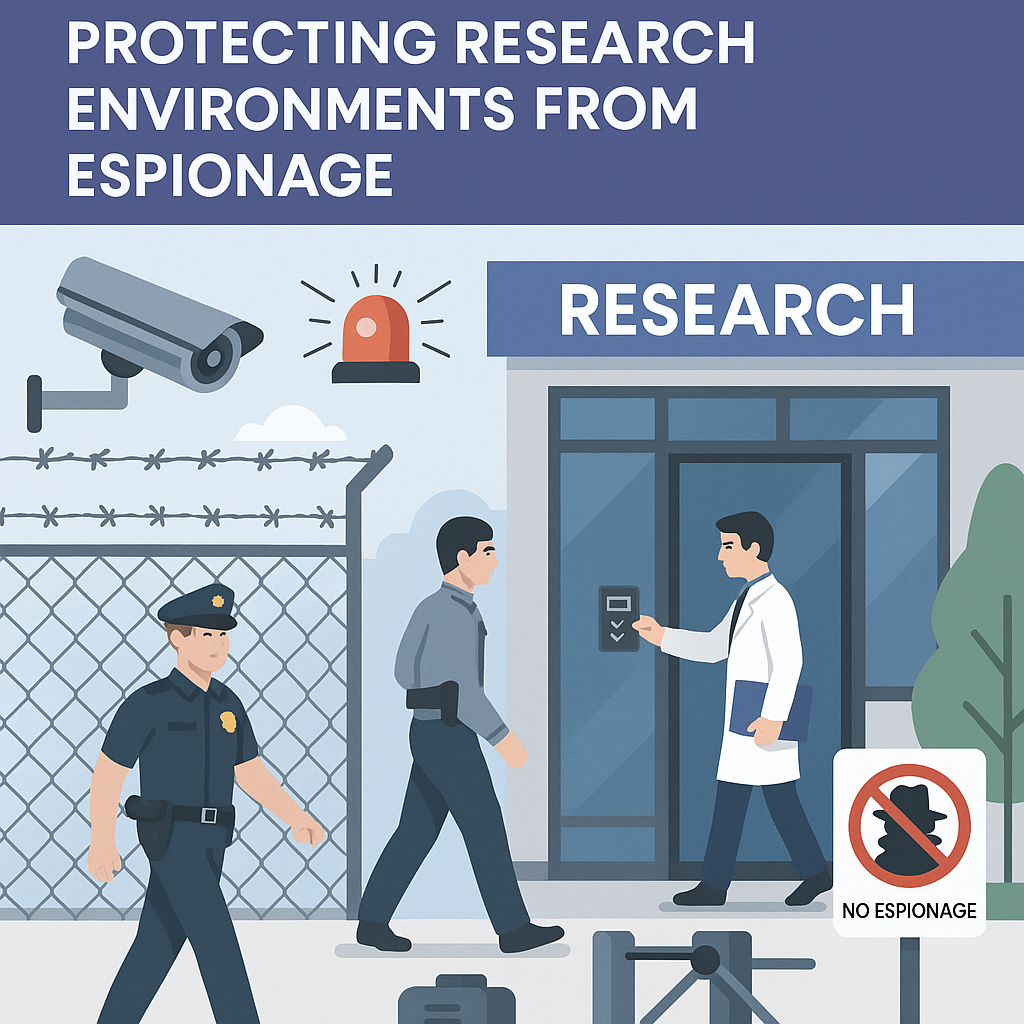
  • Physical Security Measures: Protecting Research Environments from Espionage

    Physical Security Measures: Protecting Research Environments from Espionage

    As researchers, we are driven by curiosity and a desire to advance our understanding of the world. However, this pursuit of knowledge comes with a responsibility to safeguard sensitive information and protect our research environments from those who would seek to misuse it. In today’s complex landscape, espionage is a very real threat that can compromise not only our data but also the integrity of our work.

    The consequences of falling victim to espionage are far-reaching, damaging not just our individual reputations but also the trust we have built with our colleagues, partners, and stakeholders. The risk of intellectual property theft, sabotage, or even worse – physical harm – is ever-present, making it essential that we prioritize physical security measures to safeguard our research environments.

    One of the most critical aspects of protecting our research environments is understanding the nature of espionage threats. These threats can take many forms, from low-level industrial espionage to sophisticated state-sponsored hacking operations. They often rely on social engineering tactics, exploiting human vulnerabilities to gain access to sensitive information or facilities. This highlights the importance of robust security protocols that not only prevent unauthorized access but also educate and train our researchers on these types of threats.

    Physical barriers such as secure doors, gates, and fencing can be effective deterrents, but they must be complemented by more sophisticated measures. For instance, advanced biometric authentication systems, CCTV cameras, and motion sensors can provide an additional layer of protection against would-be intruders. Moreover, the implementation of a robust access control system that requires multiple layers of verification can make it much harder for unauthorized individuals to gain access to our facilities.

    Another critical aspect of physical security is the importance of secure storage and disposal of sensitive materials. This includes not only lab equipment but also electronic devices, documents, and other potentially compromised items. The use of secure shredding services or encryption can help protect against data breaches and intellectual property theft.

    In addition to these measures, it’s also essential that we prioritize a culture of security awareness within our research teams. By educating researchers on the risks associated with espionage and providing them with the necessary training and resources to stay safe, we can significantly reduce the likelihood of an incident occurring in the first place. This includes regular drills, security audits, and ongoing updates to our security protocols.

    Ultimately, protecting our research environments from espionage requires a comprehensive approach that combines physical security measures, technical solutions, and a culture of awareness and education. By taking a proactive and multi-faceted approach to physical security, we can safeguard not only our data but also the integrity of our work, ensuring that our contributions to science and society remain genuine and trustworthy.

  • No Virginia, there is no recession on the horizon

    No Virginia, there is no recession on the horizon

    Our advanced machine learning model has delved into a wide array of economic indicators, and the findings are promising: there is less than a 2% chance of a recession occurring within the next year. This prediction is grounded in a thorough analysis of historical data combined with real-time economic trends, providing a comprehensive view of the current landscape.

    Probability of Recession: A Closer Look

    To break it down further, here’s how the probabilities of a recession unfold over different time horizons:

    • 3-Month Horizon: The chance of a recession is less than 1% (specifically, 0.86%). This indicates a very stable economic environment in the short term.
    • 6-Month Horizon: The likelihood remains low at less than 2% (0.66%). This reinforces the notion that the economy is on solid footing for the near future.
    • 12-Month Horizon: While the probability rises to approximately 33% (0.33%), it still falls below the threshold that would categorize it as a high-risk scenario. This suggests that while uncertainties may exist, they are not indicative of an imminent downturn.

    Economic Indicator Analysis: Strength in Numbers

    Our model has meticulously analyzed key economic indicators, including GDP growth, unemployment rates, inflation, and interest rates, among others. The results paint a picture of a robust economy, showing no significant signs of a slowdown or recession.

    Feature Importances: What Drives Our Predictions?

    Understanding which indicators are most influential in our model’s predictions is crucial. Here’s a breakdown of the feature importances for each horizon:

    The leading economic indicators for a 3-month horizon are:

    • LEI (Leading Economic Index) with an importance of 0.518492
    • GDP_Growth with an importance of 0.126274
    • Yield_Spread with an importance of 0.072549

    The leading economic indicators for a 6-month horizon are:

    • LEI (Leading Economic Index) with an importance of 0.448674
    • VIX (Volatility Index) with an importance of 0.106540
    • GDP_Growth with an importance of 0.101251

    The leading economic indicators for a 12-month horizon are:

    • Unemployment with an importance of 0.387461
    • CPI (Consumer Price Index) with an importance of 0.146628
    • LEI (Leading Economic Index) with an importance of 0.133595

    The Leading Economic Index (LEI) consistently emerges as a critical factor across all time horizons, underscoring its importance in forecasting economic trends. Additionally, indicators like unemployment and inflation rates play significant roles in shaping our predictions, reflecting the interconnected nature of these economic elements.

    Conclusion: A Resilient Economy Ahead

    In conclusion, our analysis of economic indicators and real-time trends leads us to a reassuring outlook: our machine learning model predicts that there is less than a 2% chance of a recession occurring within the next year. While some experts may express concerns about potential economic downturns, our findings suggest that the economy remains strong and resilient. As we move forward, it’s essential to stay informed and engaged with these trends, as they will undoubtedly shape our financial landscape in the months to come. The future looks bright, and we can approach it with confidence!