Tag: technology

  • Beware the Donaldson-Conestee Institute of Technology: A Likely Fabricated Entity Targeting Small Businesses

    Beware the Donaldson-Conestee Institute of Technology: A Likely Fabricated Entity Targeting Small Businesses

    Scams come in all shapes and sizes

    In recent weeks, small applied technology labs and contractors—particularly those in niches like database design, IT modernization, and call center systems, have reported receiving unsolicited outreach from an entity calling itself the Donaldson-Conestee Institute of Technology (often abbreviated as DC Institute or DCIT). The pitch typically involves opportunities for “small business set-aside” contracts, requests for company details, and a push to sign a mutual Non-Disclosure Agreement (NDA) as a prerequisite for further discussion. While the materials appear professional (complete with signed PDFs, logos, and detailed claims), a deeper investigation reveals this organization bears all the hallmarks of a fraudulent operation.

    The Self-Proclaimed History and Scale

    According to their website (dc.institute) and associated social media:

    • The institute claims to have been founded in 1943 during World War II, emerging from support operations at the former Donaldson Air Force Base near Lake Conestee in Greenville, South Carolina.
    • It describes itself as a major player in science, technology, engineering, and medicine, with over 8,000 employees, multiple campuses across the U.S. (including Bozeman, Montana), and global operations.
    • They boast diverse departments, including Weapons and Defense Technology (WAD-TECH), Biological Engineering and Research (DCBEAR), Aerospace Services, Robotics (via ARTI), Cybersecurity, Construction, and Information Technology.
    • Highlighted “achievements” include multi-million-dollar DoD contracts, such as a $10.5 million Navy SPAWAR award for computer storage and other purported federal grants.

    The site features polished pages on commercial offerings, careers (inviting resumes to humanresources@dc.institute), and vague calls for small business partnerships.

    Does this look like a company that does business with the Federal Government?

    Key Red Flags Indicating Illegitimacy

    Despite these grandiose claims, exhaustive searches across public records, government databases, and professional networks yield no independent verification:

    1. No Federal Registration or Contract History:
      • Not registered in SAM.gov (System for Award Management), the mandatory database for any entity receiving federal payments or bidding on government contracts.
      • No records on USAspending.gov for claimed awards (e.g., the $10.5M Navy contract).
      • Real defense/research institutes (e.g., MITRE, Johns Hopkins APL, or Draper Lab) have extensive, verifiable federal footprints—this one has none.
    2. Recent and Hidden Digital Footprint:
      • Domain dc.institute registered in May 2021—directly contradicting an 80+ year history.
      • WHOIS protected to obscure ownership; hosted via GoDaddy.
      • Online presence limited to their own site, a Facebook page (with ~3,000 likes but low engagement), a YouTube channel, and self-published “news” posts.
    3. Sparse and Suspicious Professional Presence:
      • On LinkedIn, searches for the exact name yield minimal results. The primary profile is for “Andrew Wooten” (listed as Program Manager, Clemson University education, Greenville location, only ~4 connections). Other occasional mentions (e.g., a “Hailey Rodgers” as Purchasing Agent) are thin, with low activity and no robust company page or employee network.
      • No credible alumni, partner, or employee endorsements; profiles often lack detailed experience or appear generic.
    4. Unorthodox “Verification” Requests:
      • Outreach emphasizes confirmation via the “US Small Business Chamber of Commerce” (ussbchamber.org)—a private, paid-membership site ($299–$899 fees) with no official affiliation to the U.S. Small Business Administration (SBA).
      • Legitimate set-asides require SAM.gov verification only; directing victims here is a common tactic to harvest data or push paid “certifications.”
    5. Tactics Matching Known Scams:
      • Unsolicited RFPs/NDAs to small businesses, promising set-asides or vendor listing.
      • Professional-looking documents (like the provided NDA dated December 15, 2025, signed by “Andrew Wooten”) to build trust.
      • No public complaints found yet (possibly due to recency), but the pattern aligns with advance-fee fraud, data phishing, or fake procurement schemes targeting contractors.

    What This Means for Small Businesses and Contractors

    This appears to be a sophisticated phishing or fraud scheme designed to:

    • Collect sensitive company information (capabilities, certifications, contacts).
    • Potentially lead to requests for fees (e.g., for “chamber” membership or bidding).
    • Exploit trust in “government-adjacent” opportunities, especially for SDVO, woman-owned, or other set-aside businesses.

    If you’ve received similar outreach:

    • Do not sign the NDA or share details.
    • Verify any opportunity through official channels (SAM.gov opportunities, direct agency postings).
    • Report to your email provider, the FTC (ftc.gov/complaint), or IC3.gov if suspicious.

    Legitimate opportunities abound through verified portals—focus there for real growth. The absence of any substantive LinkedIn ecosystem (no company page, minimal employee profiles, zero third-party mentions) is particularly telling for an alleged 8,000-person institute. In the professional world, real organizations live on LinkedIn; this one does not.

    Stay vigilant—innovation thrives on real partnerships, not fabricated ones. If you’re pursuing database or IT contracts, I’d be glad to help identify verified avenues!
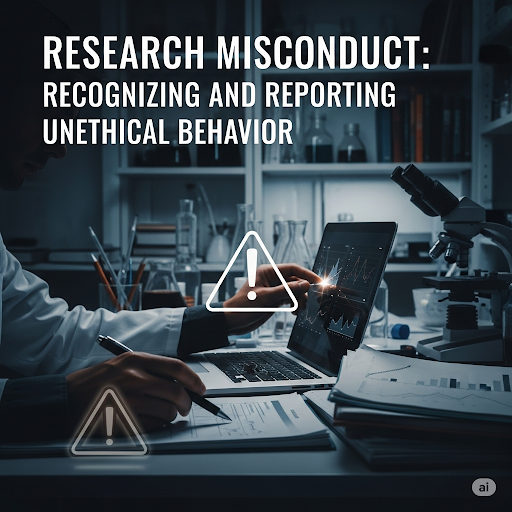
  • Research Misconduct: Recognizing and Reporting Unethical Behavior

    Research Misconduct: Recognizing and Reporting Unethical Behavior

    In today’s academic world, integrity is not just a value but a fundamental expectation. Yet, the shadows of research misconduct loom large, threatening the very trust that scientific progress relies upon. As scholars and students alike, it becomes imperative to recognize the signs of unethical behavior in research and report such misconduct to preserve the sanctity of knowledge.

    Research integrity hinges on the principles of honesty, transparency, and accountability. It ensures that data and results are reported accurately, without manipulation or fabrication. Yet, instances of research misconduct – including plagiarism, data falsification, and ghost authorship – continue to surface, tarnishing the reputation of individuals and institutions alike.

    To recognize research misconduct, one must develop a keen sense of awareness regarding certain red flags:

    1. Discrepancies in Data: When results appear too good to be true or inconsistent with previous studies, it may suggest that data has been tampered with or selectively reported. Scrutinize graphs and statistics for anomalies.

    2. Lack of Reproducibility: Independent researchers should be able to replicate studies with consistent results. If others cannot achieve the same outcomes, it raises suspicions about the authenticity of the original findings.

    3. Publication Bias: This occurs when positive or supportive research findings are selectively published, while negative or null results are discarded. A lack of diversity in published studies can indicate biased research practices.

    4. Unverifiable Citations: If you come across citations that seem vague, cannot be traced, or have been cited incorrectly, this could be a sign of plagiarism or other forms of academic dishonesty.

    5. Ethical Violations: Any behavior that compromises the ethics of research, such as coercion of participants or failure to obtain informed consent, is cause for alarm. These actions not only violate ethical standards but also compromise the integrity of the research.

    Recognizing these signs is crucial, but it’s equally important to know how to report research misconduct appropriately. Reporting should be done through established channels within the academic institution or the funding bodies involved in the research:

    1. Institutional Review Board (IRB): If you’re a student or a member of the research team, you can report misconduct directly to the IRB or an appropriate department head.

    2. Funding Agencies: Institutions often have agreements with funding agencies that require them to report misconduct. Check the terms of your grant or contract for the proper channels.

    3. Academic Journals: For instances involving published articles, journals usually have a process for reporting suspected fraud or misconduct.

    4. Professional Societies: Organizations like the American Psychological Association (APA) or the National Academies of Sciences, Engineering, and Medicine provide resources and guidance on how to address and report misconduct.

    When reporting misconduct, it is important to document everything meticulously:

    • Evidence: Keep a detailed record of what you’ve observed, including dates, names, specific instances, and any relevant correspondence.
    • Confidentiality: Maintain confidentiality unless there is an imminent danger or where required by law to disclose information.
    • Legal Advice: If you’re unsure about the process or potential legal implications, seek advice from a legal expert familiar with academic integrity matters.

    By recognizing and reporting research misconduct, we uphold the standards of academic rigor and contribute to a culture of transparency. This commitment to ethical practices ensures that scientific advancements benefit society without compromise.

    In our collective quest for knowledge, every individual plays a role in safeguarding its quality and reliability. As such, it’s everyone’s responsibility to stand up against research misconduct, fostering an environment where truth and integrity reign supreme. In the end, reporting unethical behavior not only protects the integrity of science but also enhances our own credibility as professionals and citizens.

  • Research Replication: The Role of Verification in Scientific Progress

    Research Replication: The Role of Verification in Scientific Progress

    In the world of science, replication is not just a nice idea—it’s a cornerstone for validating groundbreaking research and ensuring the reliability of our knowledge base. When Robert Hooke first peered through his microscope at the tiny structures he named “cells,” he set off a chain reaction of inquiry that scientists have been following ever since. Each discovery, from Newton’s laws to the theory of relativity, has built upon the bedrock of replicated research, creating a cumulative understanding of our universe.

    So, what exactly is research replication? At its core, it’s the process whereby scientists repeat experiments or studies to see if they get the same results. This might sound straightforward, but in reality, replicating a study is an intricate dance that requires meticulous attention to detail and often considerable effort. The importance of replication cannot be overstated. It serves as a vital check against the inevitable biases and errors that can creep into any human endeavor—especially one as complex as scientific research.

    Why is this so crucial? After all, science progresses on the shoulders of previous findings, and if those findings aren’t reliable, then the edifice of scientific knowledge becomes shaky. Consider this: every day, thousands of papers are published in scientific journals across the globe. Each paper presents new insights, revolutionary claims, or incremental advancements in understanding. Without replication, we’d be swimming in a sea of unsupported assertions, with no clear way to differentiate between what’s true and what’s mere conjecture.

    Replication studies also help to refine our methodologies. When researchers replicate an experiment, they often tweak the process here and there, using their experience to potentially improve upon the original design. This iterative approach is how science advances—it builds on past successes and learns from failures. Moreover, replication isn’t just a solo endeavor; it’s often conducted by different research teams, sometimes in completely separate locations, which adds to the validity and credibility of the findings.

    The role of verification in scientific progress goes beyond just confirming that an experiment can be repeated. It involves a thorough evaluation of the methodological rigor, the validity of the data analysis, and the interpretive soundness of the conclusions drawn. In other words, replication isn’t simply about repeating what’s been done before; it’s about rigorously examining the work to ensure it holds up under scrutiny.

    Unfortunately, there’s a darker side to replication that has garnered significant attention in recent years. Some researchers have criticized a perceived lack of emphasis on replication in modern scientific publishing, suggesting that a bias exists toward novel findings over those that confirm existing theories. This bias, often referred to as the “file drawer problem,” occurs when negative or non-replicable results are discarded or left unpublished, skewing the scientific record.

    Addressing this issue requires a culture shift within the scientific community—one that values replication as highly as it does original research. Journals and granting agencies must prioritize publishing replication studies, and scientists themselves should embrace replication as a natural part of their work rather than seeing it as a tedious afterthought. When this shift happens, the entire scientific endeavor will benefit from a more robust, trustworthy, and comprehensive understanding of the world around us.

    In conclusion, research replication is the lifeblood of scientific progress. It checks our assumptions, refines our methodologies, and ultimately ensures that the knowledge we accumulate is robust and reliable. As we continue to explore the frontiers of science, let us not forget the importance of verifying what we discover—after all, it’s through this cycle of questioning and confirmation that we truly advance our understanding of the universe.

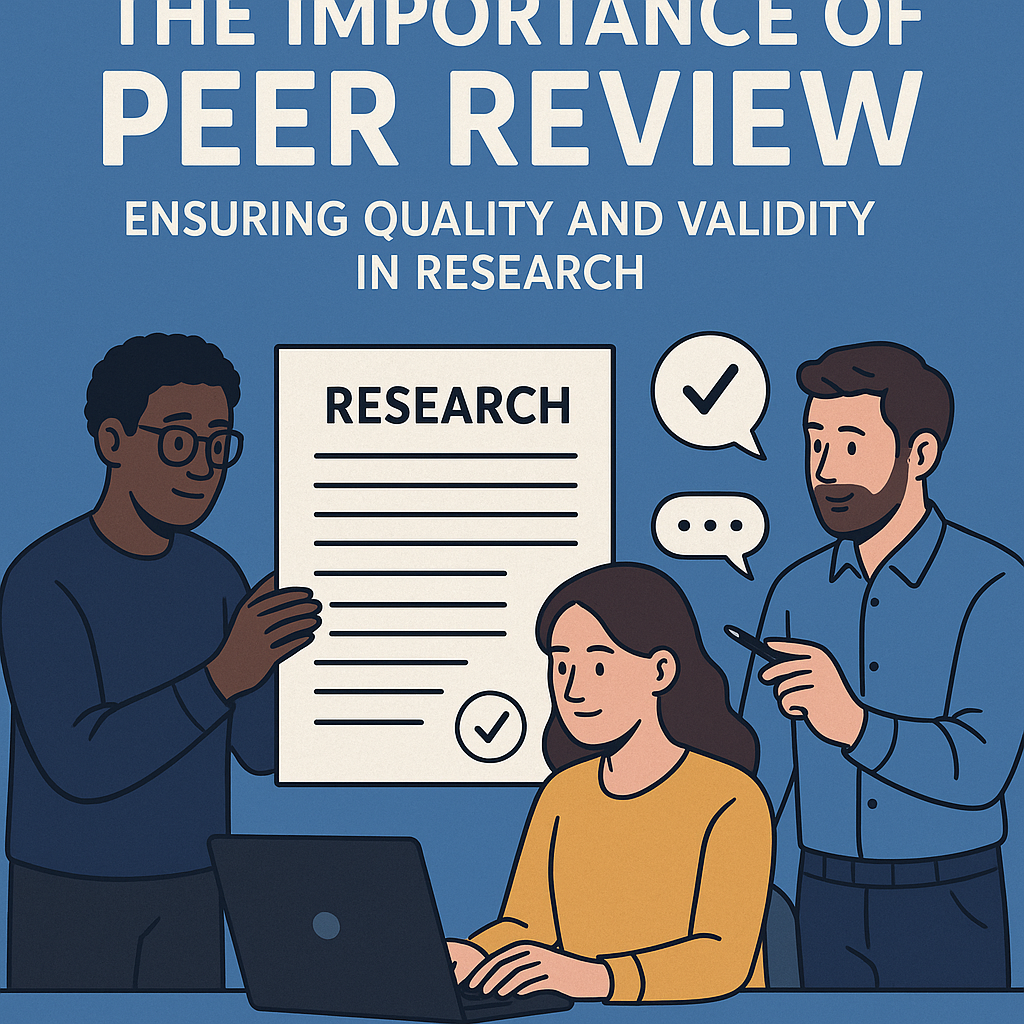
  • The Importance of Peer Review: Ensuring Quality and Validity in Research

    The Importance of Peer Review: Ensuring Quality and Validity in Research

    Today, we’re exploring a fundamental element that keeps scientific work trustworthy and robust: peer review. This process isn’t just a formality; it’s the backbone of credible research, safeguarding us from flawed findings and helping us build upon solid foundations.

    When researchers submit their manuscripts for publication, they are not merely casting them into the void of academia. Instead, these papers face a rigorous vetting process where they are scrutinized by experts in the field—peers who have a vested interest in upholding the integrity of their collective discipline. This procedure, though at times demanding and time-consuming, is absolutely essential.

    Picture this: you’ve spent months or even years conducting your research, pouring over data, experimenting, and analyzing results. The last thing you want is for your findings to be based on an error, or worse, to perpetuate misinformation. That’s where peer review steps in. It functions as an external check on the quality of work, ensuring that every claim is backed by solid evidence, and that methods are sound and replicable.

    The peer review process typically involves three stages: initial submission, review by one or more peers, and revision based on feedback. During the first stage, authors submit their manuscript for publication consideration. This can range from a research paper to a full-length article, depending on the journal’s scope. The editors then assign the submission to potential reviewers who are qualified experts in the subject matter.

    In the review phase, these peers evaluate the manuscript’s relevance, methodology, results, and conclusion. Their task is to ensure that every aspect of the research meets high standards of academic rigor. This includes checking for logical flow, coherence, clarity, and adherence to the principles of the scientific method. They may also suggest revisions or recommend rejection if they find major flaws or if the work does not contribute significantly to the existing body of knowledge.

    If a manuscript passes the initial review, it moves to the revision stage. Authors must address the reviewers’ comments and criticisms. This can involve substantial reworking of the text, correction of errors, and reanalysis of data. The goal here is to produce a polished piece that accurately reflects the research conducted, with all its complexities and nuances.

    Some might wonder why go through such trouble? The answer lies in the credibility and reliability of scientific research. Peer review acts as a quality filter, reducing the risk of publishing works that are not up to par. It ensures that what gets published is not just novel or intriguing but also valid and trustworthy. This is crucial not only for maintaining the reputation of academic journals and publishers but also for the entire scientific community. Each piece of research builds on what came before it, and flawed work can lead to erroneous conclusions being accepted as truth.

    Moreover, peer review encourages transparency and replication. Researchers must disclose their methods and data, enabling others to test their results and validate them independently. This open exchange fosters collaboration and advances our collective understanding.

    However, not all peer review processes are created equal. Some journals have rigorous standards and multiple rounds of review, while others may not be as stringent. As a consumer of academic literature, it’s important to look for journals with reputations for high-quality peer review.

    In conclusion, the peer review process is an indispensable part of scientific research, ensuring the work we rely on is sound and truthful. It’s a collaborative effort that not only guards against errors but also drives innovation and progress in our understanding of the world. So next time you read a research article, remember the tireless reviewers who worked to make it a reliable source of information. And for those embarking on their research journeys, embrace the peer review process—it’s your ticket to contributing to the collective body of knowledge with confidence and credibility. Thanks for reading, and see you next week!

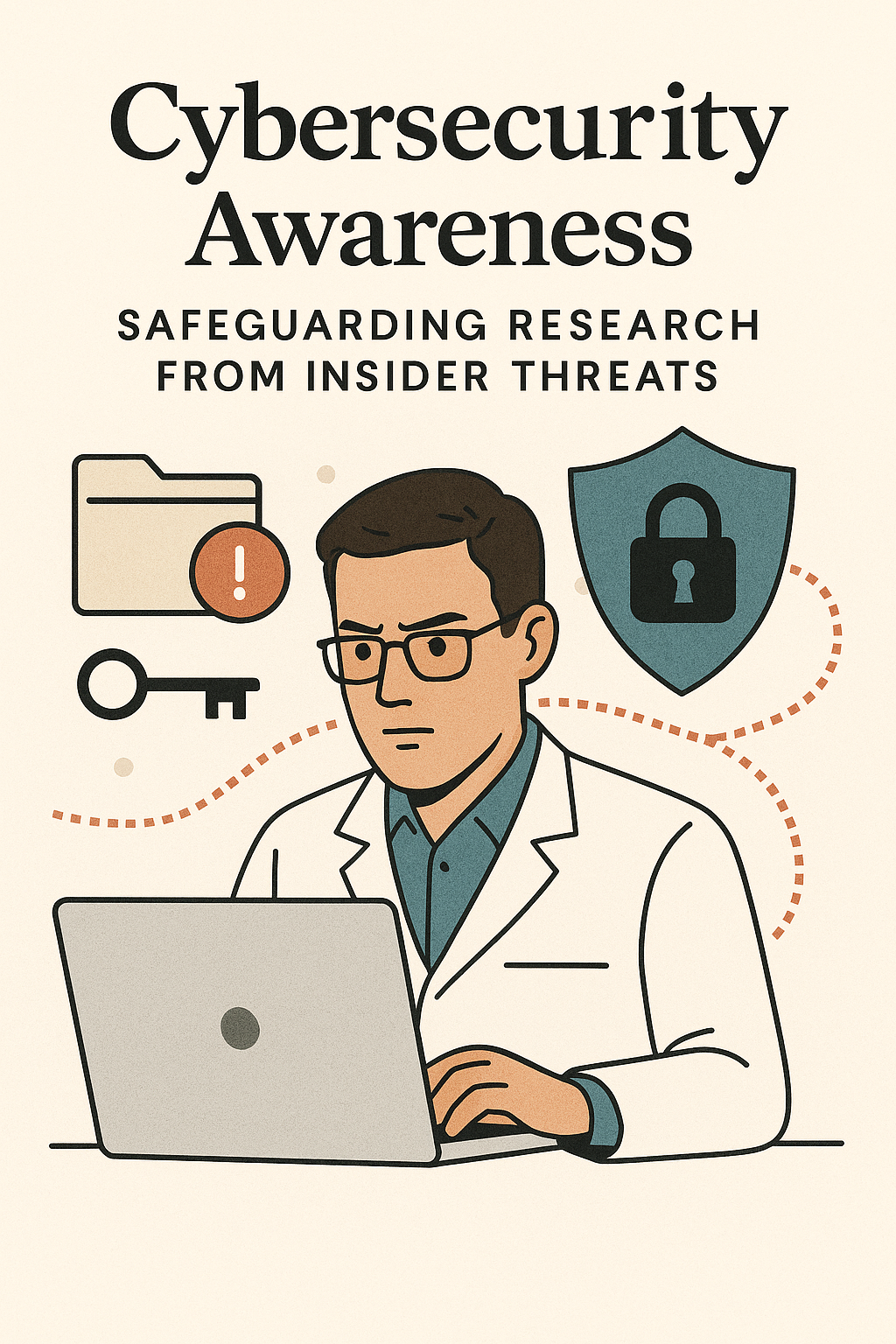
  • Cybersecurity Awareness: Safeguarding Research from Insider Threats

    Cybersecurity Awareness: Safeguarding Research from Insider Threats

    As researchers, we’re all too familiar with the concept of confidentiality, integrity, and availability – the pillars that underpin any secure data handling process. However, there’s a particular threat to these principles that we often overlook, despite its potential for catastrophic consequences: insider threats.

    An insider threat can manifest in many ways, from accidental negligence to deliberate sabotage. In the context of research, an insider threat could compromise sensitive data, disrupt project timelines, or even lead to intellectual property theft. The question is, how do we safeguard our research from these insidious dangers?

    One critical aspect of mitigating insider threats lies in education and awareness. It’s not enough to simply implement technical controls; researchers need to understand the risks associated with their actions. This includes being mindful of sensitive data handling practices, recognizing the importance of access control, and avoiding behaviors that could be exploited by malicious actors.

    When it comes to safeguarding research from insider threats, one key strategy is to adopt a layered approach to security. This involves combining technical controls like encryption and access management with non-technical measures such as employee education and awareness programs. By doing so, we can create a robust defense against insider threats that’s far more effective than relying on any single solution.

    One of the primary challenges in addressing insider threats is striking a balance between security and usability. On one hand, overly restrictive controls can stifle productivity and collaboration; on the other hand, lax policies can leave sensitive data vulnerable to exploitation. By implementing solutions that are both secure and user-friendly, we can minimize the risk of insider threats without compromising our research goals.

    Another essential component in mitigating insider threats is to establish a culture of transparency and accountability within our institutions. This involves fostering an environment where employees feel comfortable reporting concerns or suspicious behavior without fear of retribution. By doing so, we can identify potential issues early on and take proactive steps to address them before they escalate into major incidents.

    In addition to these measures, it’s essential to conduct regular security audits and risk assessments to identify vulnerabilities in our systems and processes. This involves monitoring employee activity, analyzing access patterns, and reviewing data handling practices to ensure compliance with established policies and procedures. By staying vigilant and proactive, we can minimize the likelihood of insider threats and safeguard our research from potential harm.

    While no single solution can completely eliminate the risk of insider threats, a comprehensive approach that combines education, awareness, technical controls, and non-technical measures can significantly reduce this risk. By working together to create a culture of security and accountability within our institutions, we can protect our research from these insidious dangers and continue advancing knowledge with confidence.

    In conclusion, safeguarding our research from insider threats requires a multifaceted approach that addresses both technical and human factors. By prioritizing education, awareness, transparency, and accountability, we can minimize the risk of insider threats and ensure the continued integrity of our research endeavors. As researchers, it’s our responsibility to stay vigilant and proactive in this regard, and by doing so, we can safeguard our work for years to come.

  • Time Management for Students: Strategies for Academic Success

    Time Management for Students: Strategies for Academic Success

    Hey there, aspiring scholars! Here are some gold nuggets to help you conquer the mountainous pile of assignments and exams looming over your heads. Let’s dive into strategies that will revolutionize how you approach your academic workload.

    First off, let’s address the elephant in the room: Procrastination. We’ve all been there, staring at a blank screen while Instagram calls our name. The secret? Start with the hardest task first thing in the morning. You’ll tackle it when your brain is fresh and before it starts to feel like wading through molasses. Plus, crossing it off the list will give you that satisfying rush that makes everything else seem a breeze.

    Next, set yourself up for success by creating a study schedule. This isn’t about chaining yourself to a desk from dawn till dusk; it’s about setting aside specific times each day when you’ll focus on your studies. Think of it as carving out mental real estate. Your brain will get used to the rhythm and make studying almost second nature.

    Now, let’s talk about creating a productive workspace. Keep it tidy and free from distractions—no piles of dirty laundry or buzzing phones. A clean environment can help keep your mind focused. Also, consider lighting. Natural light is ideal, but if you’re working at night, soft, warm lighting can help prevent eye strain.

    Another gem: Use a planner or digital calendar to jot down deadlines and important tasks. This way, you won’t find yourself scrambling at the eleventh hour. Allocate time for each task and stick to your schedule. It’s like laying out a roadmap to your academic achievements. And don’t forget to color code! It adds a dash of fun to organization.

    Breaks are crucial too. Think of your brain like a high-performance car; it needs time to cool down and recharge after driving hard. Take short breaks between study sessions, use techniques like the Pomodoro Technique (25 minutes of work followed by a 5-minute break), and you’ll find that your productivity soars.

    Moreover, harness the power of technology—there are apps galore designed to help manage time wisely. Whether it’s for blocking distracting websites or reminding you to take breaks, these tools can be your best allies.

    As you incorporate these strategies into your academic life, remember to be flexible. Things happen. Plans change. What’s important is that you adapt and keep moving forward. Being resilient in the face of unexpected challenges will serve you well beyond the classroom.

    Finally, don’t forget to prioritize self-care. Getting enough sleep, eating well, and staying active are not luxuries; they’re necessities for a sharp mind and a stress-free life. You can’t pour from an empty cup, so fill yours with nutritious treats and quality rest.

    In summing up, mastering time management is about taking control of your academic journey, setting realistic goals, and making every moment count. By embracing these strategies, you’ll find yourself soaring towards the top of your class, ready to tackle any challenge that comes your way. Good luck, student warriors! Now go conquer those assignments.

  • Unveiling Hidden Biases in Research Methods

    Unveiling Hidden Biases in Research Methods

    As researchers, we strive for objectivity and accuracy in our findings. However, it’s becoming increasingly evident that hidden biases can creep into even the most well-intentioned studies. In this article, I’ll discuss how these biases can affect research methods and provide guidance on identifying and mitigating them.

    Biases in research are often unconscious, stemming from our own cultural, social, or personal backgrounds. They can manifest in various ways, such as sampling frames that exclude specific demographics, data analysis techniques that favor certain variables, or even language used in questionnaires that might inadvertently skew responses. These biases can lead to distorted conclusions and undermine the credibility of our research.

    One common source of bias is the sampling frame itself. If the sample doesn’t reflect the population being studied, it’s impossible to generalize findings with confidence. For instance, if a study on customer satisfaction only includes data from urban areas, the results may not be representative of rural customers. To avoid this, researchers should strive for diverse sampling frames that capture the full range of their target population.

    Another area where biases can arise is in data analysis. Certain techniques, such as correlation vs. causation or the over-reliance on statistical significance, can create an inaccurate picture of relationships between variables. Furthermore, some analyses might inadvertently amplify existing biases by focusing on the wrong variables or using flawed methods. To address this, researchers should be aware of these pitfalls and use alternative approaches that account for bias.

    Language in questionnaires is another frequently overlooked area where biases can occur. Words and phrases can have different meanings to different groups, and what’s neutral to one person might be perceived as negative by another. For example, using the term “minority” to describe underrepresented groups can come across as derogatory if not phrased carefully.

    So, how can researchers identify and mitigate hidden biases in their methods? The first step is recognizing that biases exist. This involves acknowledging the potential for our own preconceptions to influence our research design and methods. By being aware of these biases, we can take steps to address them before they affect our findings.

    One approach is to use bias-reducing techniques such as pilot testing with diverse groups or using multiple data sources. Another strategy is to involve team members from underrepresented backgrounds in the research process, bringing different perspectives and insights to the table. Finally, being transparent about methods and potential biases can help maintain the trust of participants and readers.

    In conclusion, hidden biases in research methods are a serious concern that can undermine the validity and credibility of our findings. By understanding how biases arise and taking steps to address them, researchers can increase the accuracy and reliability of their work. As we strive for excellence in our field, it’s essential that we acknowledge these limitations and work towards creating more inclusive and equitable research practices.

  • Using Technology to Enhance Time Management: Apps and Tools for Productivity

    Using Technology to Enhance Time Management: Apps and Tools for Productivity

    In today’s fast-paced world, managing time efficiently has become crucial for both personal success and professional growth. With the constant influx of information and tasks, traditional time management techniques sometimes fall short. Fortunately, technology offers an array of innovative solutions to help us maximize our productivity. In this issue of our newsletter, we’re diving into the treasure trove of apps and tools designed to revolutionize how you handle your day-to-day commitments.

    Embrace the power of technology to enhance your time management skills.

    I’ve sifted through countless apps and software to bring you a curated list of the best time management tools that can make a real difference in your life. From scheduling to task prioritization, these technologies are crafted to help you accomplish more without feeling overwhelmed.

    1. Project Management Platforms:

    Whether you’re a freelancer or managing a team, project management platforms like Trello and Asana provide a visual and organized way to keep track of tasks. They allow you to break down projects into smaller, manageable pieces, which makes it easier to see progress and allocate time effectively. These tools also support collaboration, ensuring that everyone involved in the project is on the same page.

    2. Task Management Apps:

    For individuals or those who prefer a more personal touch, task management apps such as Todoist and Microsoft To Do are perfect. They help you create daily to-do lists and prioritize tasks based on urgency and importance. With these apps, you can easily monitor what needs to be done now versus later, ensuring nothing falls through the cracks.

    3. Calendar Integrations:

    Google Calendar stands out as a powerful tool that integrates seamlessly with other productivity apps. It allows you to schedule tasks, meetings, and even block out time for deep work sessions. By visually mapping out your week or month, you can avoid scheduling conflicts and ensure you’re setting aside time for both work and personal commitments.

    4. Email Management Tools:

    The relentless flow of emails can quickly derail a productive day. Solutions like Boomerang and SaneBox help manage this influx by allowing you to schedule when to read and respond to emails, thus preventing interruptions. They also provide features to prioritize messages based on importance and sender reputation.

    5. Time Tracking Apps:

    Tools like Toggl or Harvest enable you to monitor how you spend your time. By tracking where you invest your hours, you can identify patterns of inefficiency and reallocate your time to more productive activities. It’s eye-opening to see exactly how much time you might be wasting on less important tasks.

    6. Mind Mapping Software:

    Mind mapping tools like MindMeister and XMind are excellent for brainstorming and organizing ideas. They help visualize connections between different concepts and projects, promoting creative thinking. This can lead to innovative solutions for time-consuming problems.

    Incorporating technology into your daily routine doesn’t have to be complicated or intimidating. Start by selecting one or two apps that address your most pressing productivity needs and integrate them gradually into your workflow. Remember, the key is not to rely solely on these tools but to use them as a supplement to your existing strategies.

    My takeaway: Embrace the power of technology to enhance your time management skills. With the right apps and tools, you can reclaim control over your schedule and make every minute count. So why wait? Dive into the digital realm of productivity and watch your efficiency soar to new heights!

  • Understanding the Risks of Collaboration: Navigating International Partnerships Safely

    Understanding the Risks of Collaboration: Navigating International Partnerships Safely

    As businesses expand globally, international partnerships have become a crucial component of success. Collaborations with foreign entities can bring in new markets, technologies, and expertise, but they also introduce unique risks that must be carefully managed. In this article, we’ll delve into the potential hazards of collaboration and offer practical guidance on how to navigate these relationships safely.

    One of the most significant risks associated with international partnerships is cultural and language barriers. When working with partners from diverse backgrounds, there’s a high likelihood of miscommunication, misunderstandings, and misaligned expectations. To mitigate this risk, it’s essential to establish clear communication channels and invest time in learning about your partner’s culture, values, and business practices.

    Another critical consideration is the regulatory environment. Different countries have distinct laws and regulations that govern business activities, intellectual property, and consumer protection. Failure to comply with these regulations can result in costly fines, reputational damage, or even legal action. It’s vital to conduct thorough research on your partner’s jurisdiction and ensure you’re aware of any applicable laws and regulations.

    Intellectual property (IP) is another sensitive area that requires careful attention when collaborating with international partners. The risk of IP theft, misappropriation, or unauthorized use is substantial, particularly in countries with weaker IP protections. To minimize this risk, it’s crucial to include robust IP protection clauses in your partnership agreements and conduct regular audits to monitor compliance.

    Lastly, the risk of reputational damage should not be underestimated. A single misstep or controversy can have far-reaching consequences for both parties involved. It’s essential to establish a strong reputation management framework that includes monitoring social media, news outlets, and industry publications to quickly respond to any negative developments.

    So, how can you navigate international partnerships safely? First, take the time to research your potential partners thoroughly, including their business practices, values, and regulatory environment. Establish clear communication channels and invest in cultural training to ensure everyone is on the same page. Include robust IP protection clauses in your partnership agreements and conduct regular audits to monitor compliance.

    It’s also crucial to establish a strong reputation management framework that includes monitoring social media, news outlets, and industry publications. Finally, be prepared for the unexpected by having a contingency plan in place to address any issues that may arise during the collaboration.

    By taking these precautions seriously and being mindful of the potential risks associated with international partnerships, you can minimize the likelihood of complications and maximize the benefits of collaboration. With careful planning, effective communication, and robust risk management, your business can successfully navigate the complexities of global partnerships and reap the rewards of a thriving, interconnected world.

  • No Virginia, there is no recession on the horizon

    No Virginia, there is no recession on the horizon

    Our advanced machine learning model has delved into a wide array of economic indicators, and the findings are promising: there is less than a 2% chance of a recession occurring within the next year. This prediction is grounded in a thorough analysis of historical data combined with real-time economic trends, providing a comprehensive view of the current landscape.

    Probability of Recession: A Closer Look

    To break it down further, here’s how the probabilities of a recession unfold over different time horizons:

    • 3-Month Horizon: The chance of a recession is less than 1% (specifically, 0.86%). This indicates a very stable economic environment in the short term.
    • 6-Month Horizon: The likelihood remains low at less than 2% (0.66%). This reinforces the notion that the economy is on solid footing for the near future.
    • 12-Month Horizon: While the probability rises to approximately 33% (0.33%), it still falls below the threshold that would categorize it as a high-risk scenario. This suggests that while uncertainties may exist, they are not indicative of an imminent downturn.

    Economic Indicator Analysis: Strength in Numbers

    Our model has meticulously analyzed key economic indicators, including GDP growth, unemployment rates, inflation, and interest rates, among others. The results paint a picture of a robust economy, showing no significant signs of a slowdown or recession.

    Feature Importances: What Drives Our Predictions?

    Understanding which indicators are most influential in our model’s predictions is crucial. Here’s a breakdown of the feature importances for each horizon:

    The leading economic indicators for a 3-month horizon are:

    • LEI (Leading Economic Index) with an importance of 0.518492
    • GDP_Growth with an importance of 0.126274
    • Yield_Spread with an importance of 0.072549

    The leading economic indicators for a 6-month horizon are:

    • LEI (Leading Economic Index) with an importance of 0.448674
    • VIX (Volatility Index) with an importance of 0.106540
    • GDP_Growth with an importance of 0.101251

    The leading economic indicators for a 12-month horizon are:

    • Unemployment with an importance of 0.387461
    • CPI (Consumer Price Index) with an importance of 0.146628
    • LEI (Leading Economic Index) with an importance of 0.133595

    The Leading Economic Index (LEI) consistently emerges as a critical factor across all time horizons, underscoring its importance in forecasting economic trends. Additionally, indicators like unemployment and inflation rates play significant roles in shaping our predictions, reflecting the interconnected nature of these economic elements.

    Conclusion: A Resilient Economy Ahead

    In conclusion, our analysis of economic indicators and real-time trends leads us to a reassuring outlook: our machine learning model predicts that there is less than a 2% chance of a recession occurring within the next year. While some experts may express concerns about potential economic downturns, our findings suggest that the economy remains strong and resilient. As we move forward, it’s essential to stay informed and engaged with these trends, as they will undoubtedly shape our financial landscape in the months to come. The future looks bright, and we can approach it with confidence!