Tag: time management

  • The 7 Habits of Highly Effective People: A Time Management Perspective

    The 7 Habits of Highly Effective People: A Time Management Perspective

    Time management is an elusive concept that many of us grapple with daily. With the constant barrage of work, family commitments, and personal aspirations, it’s easy to feel like we’re spinning our wheels, trying to keep up. But what if there was a blueprint—a set of habits—that could not only help you manage your time more effectively but also lead you to greater personal and professional success? Enter the 7 Habits of Highly Effective People, a seminal work by Dr. Stephen R. Covey.

    Covey’s habits are not just about squeezing more tasks into a day; they’re about prioritizing what truly matters, developing win-win relationships, and building self-awareness and integrity. Let’s dive into how each habit can transform your approach to time management.

    1. Be Proactive: The first habit is about taking responsibility for your life. It means choosing to act rather than react. By doing this, you control the agenda rather than letting circumstances dictate your actions. This proactive stance allows you to anticipate problems and plan solutions ahead of time, giving you a buffer against time-consuming crises.
    2. Begin with the End in Mind: Visualize your ideal future self and understand your core values and goals. This habit guides your daily actions, making sure that everything you do aligns with your vision. When you’re clear about your end goal, time-wasting distractions fall away as you focus on what truly advances you toward your objectives.
    3. Put First Things First: Prioritize tasks based on their importance and urgency. The principle here is to tackle the most crucial and time-sensitive tasks first, ensuring that what really matters gets done. By doing so, you avoid getting bogged down with less important activities that steal away precious time.

    4.). Think Win-Win: Create relationships where both parties benefit. This habit promotes mutual respect and collaboration, saving time and energy from unnecessary conflicts. By fostering positive interactions, you can streamline your interactions, turning potentially contentious encounters into productive partnerships.

    1. Seek First to Understand, Then to Be Understood: Good communication is key to effective time management. Active listening ensures that you fully grasp others’ needs and concerns before voicing your own. This habit cuts down on misunderstandings and the need for repeated explanations, saving you hours of wasted time in conversations.
    2. Synergize: Work with others to achieve more than you could alone. Synergy means finding creative solutions that are greater than the sum of individual efforts. When you collaborate effectively, tasks can be accomplished faster and with better results—effectively leveraging the strengths and skills of those around you.
    3. Sharpen the Saw: Self-renewal through balanced growth is essential for long-term effectiveness. This habit is all about maintaining a healthy work-life balance. Regularly investing in your physical, mental, and emotional well-being means you’ll be more productive and less likely to burn out, allowing you to manage your time wisely.

    Implementing these habits requires conscious effort and consistent practice. But once you adopt them, they become powerful tools to reclaim control over your time. By prioritizing your life according to these principles, you can eliminate unnecessary tasks, streamline your workflow, and make every moment count.

    In essence, effective time management is about making deliberate choices that reflect your values and align with your vision. The 7 Habits of Highly Effective People provide a framework to help you do just that. So, why not start today? Adopt these habits, and experience the freedom that comes from having control over your time. Your future self will thank you for it.
  • Prioritizing Tasks: The Eisenhower Matrix in Daily Planning

    Prioritizing Tasks: The Eisenhower Matrix in Daily Planning

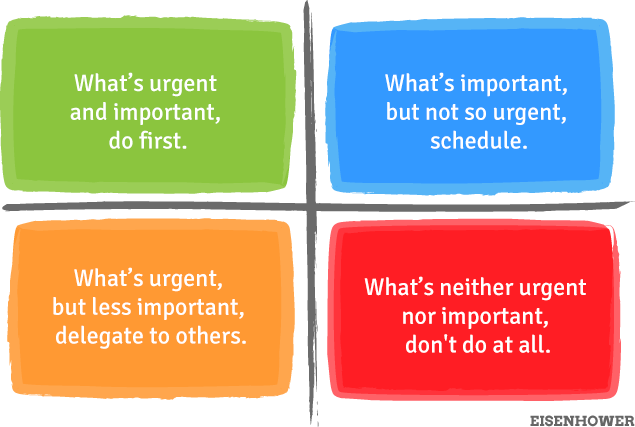
    Have you ever found yourself drowning in a sea of tasks, struggling to determine which one to tackle first? If so, you’re not alone. Time management is a challenge that many face, particularly in our fast-paced, multitasking world. However, there’s a strategy that can bring clarity to your chaos: the Eisenhower Matrix. Named after the legendary U.S. President Dwight D. Eisenhower, this matrix helps you categorize tasks based on their urgency and importance, ensuring that you tackle what truly matters first.

    Let’s dive into how you can apply the Eisenhower Matrix to your daily planning:

    The Basics of the Eisenhower Matrix

    At its core, the Eisenhower Matrix divides tasks into four quadrants:

    1. Urgent/Important (Q1): These are tasks that demand immediate attention and carry significant importance. Examples include urgent client requests or critical deadlines.
    2. Not Urgent/Important (Q2): These are tasks that might be important but can wait a bit. Think strategic planning, networking, or skill development activities that can be postponed without major consequences.
    3. Urgent/Not Important (Q3): This category includes tasks that create a false sense of urgency. They’re time-consuming and don’t contribute to your long-term goals. Meetings that could be replaced with a quick email, for example, might fall here.
    4. Not Urgent/Not Important (Q4): Finally, this quadrant houses tasks that can be safely ignored or delegated. These include time-wasters like unnecessary meetings or low-priority social media scrolling.

    Applying the Matrix to Your Day

    Imagine you’ve just opened your email after a morning coffee and are faced with a to-do list that spans the entire day. Here’s how you’d use the Eisenhower Matrix to prioritize:

    • Q1: Check your inbox for any urgent emails or tasks. Reply immediately, or delegate if possible.
    • Q2: Allocate time for your important but not urgent tasks. These might include developing a new proposal for a client, reading industry reports, or networking with peers.
    • Q3: Be wary of tasks that scream “do me now!” but aren’t truly important. Assess if they can be delegated or delayed without causing harm.
    • Q4: For anything in the last quadrant, think twice before dedicating your precious time to it. Ask yourself: Is this really necessary? Can someone else do it?

    Eisenhower’s Philosophy

    Dwight Eisenhower famously said, “What is important is seldom urgent, and what is urgent is seldom important.” This mantra encapsulates the essence of the Eisenhower Matrix. It encourages you to focus on tasks that might not scream “do me now!” but are crucial for your long-term goals.

    Maximizing Your Productivity

    By using the Eisenhower Matrix, you’ll not only prioritize your tasks more effectively but also reduce stress and improve your productivity. You’ll learn to say no to less important tasks and yes to those that truly matter, ensuring that every minute of your day counts toward your objectives.

    In Practice

    Let’s put this into practice with a scenario:

    You have a meeting at 10 AM (Q1 urgency) but also need to finish a strategic report due in a week (Q2 importance). Two coworkers ask for urgent help that could be delegated (Q3), and you notice a social media notification (Q4) about a colleague’s birthday.

    • Q1: Attend the 10 AM meeting without delay; set a reminder 5 minutes before to ensure punctuality.
    • Q2: Allocate an hour before the meeting to work on your report. Use this focused time block as a “protected” period, during which you’ll tackle only Q2 tasks.
    • Q3: Delegate the two requests to colleagues who have more bandwidth or can address them quicker.
    • Q4: Log out of social media or set it to do not disturb for that hour to resist the temptation and focus on your report.

    The Benefits

    Embracing the Eisenhower Matrix offers numerous benefits, including:

    • A clear roadmap for your day
    • Reduced stress from knowing you’re focusing on what matters most
    • Increased efficiency as you tackle important tasks first
    • Enhanced productivity by minimizing distractions

    In conclusion, adopting the Eisenhower Matrix into your daily planning routine can revolutionize how you approach your to-do list. By distinguishing between urgency and importance, you’ll find yourself tackling the right tasks at the right time, leading to greater satisfaction and success in your professional endeavors. Remember, managing your time wisely isn’t just about being busy—it’s about being productive and focused on what truly matters. So, next time you’re faced with a daunting list of tasks, give the Eisenhower Matrix a try. It might just be the turning point in mastering your day.

  • Streamlining Lab Operations with Digital Tools

    Streamlining Lab Operations with Digital Tools

    In today’s fast-paced scientific landscape, laboratories must keep pace with the relentless demand for efficiency and accuracy. Gone are the days when manual processes and paper records sufficed to support rigorous research. The integration of digital tools in lab operations has become a revolution not just an evolution. For anyone leading or working within a lab environment, adopting digital solutions is not merely beneficial—it’s imperative.

    Digital transformation in labs begins with understanding that these spaces are now command centers for data-driven decision-making. The digitization of processes such as inventory management, data collection, and experiment documentation significantly reduces human error and increases productivity. Here’s how you can leverage digital tools to streamline your lab operations:

    Automate Inventory Management

    Manual tracking of reagents, chemicals, and equipment can lead to wastage and delays in experiments. By employing automated inventory systems, laboratories can maintain real-time records, reducing the chances of shortages or expired materials. These tools allow for easy restocking based on consumption rates and provide analytics that help predict future needs.

    Enhance Data Collection and Analysis

    Data is the lifeblood of science. Using digital tools for data collection not only ensures accuracy but also accelerates the analysis process. Software solutions like electronic laboratory notebooks (ELNs) allow scientists to input, organize, and analyze data in real-time, streamlining workflows and enabling quicker decision-making.

    Integrate with Cloud-Based Solutions

    Cloud-based technologies offer a secure platform for storing vast amounts of data. This integration ensures that researchers have access to data anytime, anywhere, fostering collaboration and the ability to work on projects regardless of location. Moreover, cloud solutions often provide advanced features like automated backups and data recovery, ensuring that crucial research is never lost.

    Optimize Experiment Protocols

    Digital tools can automate repetitive tasks within experiments, such as setting up equipment, adjusting parameters, or recording results. This automation not only speeds up the process but also minimizes human error and allows scientists to focus on interpreting results rather than performing mundane tasks.

    Improve Communication and Collaboration

    Effective communication and teamwork are cornerstones of successful lab operations. Digital tools facilitate seamless communication, enabling teams to share findings, discuss ideas, and work on projects in real-time. Platforms like Slack, Microsoft Teams, and Trello can enhance inter-departmental coordination and foster a culture of continuous learning and improvement.

    Ensure Regulatory Compliance

    Keeping track of regulatory changes and ensuring compliance can be a daunting task. Digital tools can help automate this process by integrating regulatory updates into the workflow, issuing alerts when changes occur, and providing documentation that proves compliance.

    Real-time Monitoring and Troubleshooting

    Equipping labs with smart instruments that offer real-time monitoring and remote diagnostics allows for quick identification of issues. These tools not only reduce downtime but also provide predictive maintenance schedules, extending the lifespan of expensive equipment.

    As we venture into a future where scientific discovery knows no bounds, the role of digital tools in revolutionizing lab operations cannot be overstated. Embracing these technologies enables labs to operate with greater efficiency, precision, and innovation, ultimately leading to groundbreaking research and advancements that benefit society as a whole.

    For lab managers and researchers alike, the journey towards digitalization is not just about staying current—it’s about harnessing the full potential of modern technology to push the boundaries of what’s possible. So let’s embrace the change, revamp our workflows, and move forward together, creating a more streamlined and impactful scientific future.

  • The Importance of Delegation: Freeing Up Time for What Matters Most

    The Importance of Delegation: Freeing Up Time for What Matters Most

    In today’s fast-paced world, productivity has become synonymous with success. Businesses and professionals are constantly seeking ways to maximize their output while minimizing their input. One often-overlooked strategy that can drastically increase efficiency is delegation. The importance of delegation cannot be overstated; it allows us to free up time for the truly meaningful tasks that drive our businesses forward.

    Let’s break down why delegation matters and how it can revolutionize your workflow:

    Delegation Simplifies Complexity

    When we try to handle every task ourselves, we often become bogged down by the complexity of juggling multiple responsibilities. This not only slows us down but can also lead to burnout. By delegation, you’re essentially dividing this complexity into manageable parts. Each task is given to someone who specializes in it or has the capacity to handle it more efficiently. This division of labor means that each person focuses on what they do best, leading to quicker and more effective outcomes.

    Delegation Enhances Efficiency

    Time is a finite resource. When we delegate tasks, we conserve our own precious time for more strategic endeavors. Let’s say you’re an entrepreneur running a growing business. Instead of being stuck in the weeds of day-to-day operations, you should focus on high-level strategy and growth tactics. Delegating allows you to hand off these operational tasks to a team member or a service provider, giving you back hours that can be better spent nurturing customer relationships, innovating new products, or scaling your business.

    Delegation Fosters Growth and Development

    By delegating tasks, we create opportunities for growth and development within our teams. It gives employees a chance to hone their skills, take on new challenges, and earn recognition for their contributions. Moreover, it encourages a culture of trust and empowerment. When team members know they are trusted to handle responsibilities, it boosts morale and job satisfaction, which in turn can improve overall productivity.

    Delegation Promotes Better Use of Resources

    Sometimes, we try to do everything ourselves simply because it’s familiar or because we don’t want to let go of control. However, delegation allows us to tap into the unique strengths and skills of others. It ensures that resources — be it money, time, or expertise — are allocated where they can do the most good. For instance, if you’re not a graphic designer, delegating your design projects to a professional means you’re investing in quality work that aligns with your brand’s identity.

    Delegation Encourages Collaboration

    In a business setting, delegation often encourages cross-functional collaboration. When tasks are delegated across different departments, it creates interdependencies and fosters communication. This network of teamwork can lead to innovative solutions and improvements that wouldn’t have been possible in a siloed approach.

    Delegation Allows for Focus on Mission-Critical Tasks

    The ultimate goal for any business owner or leader is to ensure the company achieves its mission and vision. Delegation enables you to focus your energy and attention on those critical tasks that drive your business forward. Whether it’s developing a new marketing strategy, closing a major deal, or refining your product offering, having the time to concentrate on these high-impact activities can make all the difference.

    In conclusion, the importance of delegation extends far beyond just saving time. It’s about empowering yourself and your team, fostering a culture of growth, and ensuring that the most strategic and impactful tasks are handled by the right people. As you move forward, consider which tasks you can safely hand over and make room for the truly important work that only you can do.

    I urge you to embrace the power of delegation and watch as it transforms not just your workflow, but the entire trajectory of your business success.

  • Setting SMART Goals: A Framework for Effective Time Management

    Setting SMART Goals: A Framework for Effective Time Management

    As professionals, we’ve all been there – staring blankly at our to-do lists, feeling overwhelmed by the sheer amount of tasks competing for our attention. It’s easy to get bogged down in the minutiae, struggling to make progress on even the most important projects. But what if you could break free from this cycle of procrastination and focus? The key lies in setting SMART goals – a framework that helps you prioritize effectively, manage your time wisely, and achieve real success.

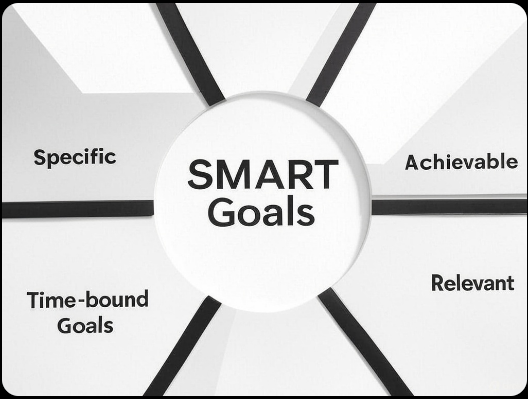
    So, what exactly is a SMART goal? Simply put, it’s a specific, measurable, achievable, relevant, and time-bound objective. By incorporating these five elements into your goals, you’ll be able to create a roadmap for success that truly works for you. Let’s dive in and explore each of these components in detail.

    First up: specificity. Your goal should be clear and concise, leaving no room for misinterpretation. Instead of aiming “to work harder,” try “increasing my productivity by 20% within the next three months.” See how much more manageable that sounds? By focusing on a specific outcome, you’ll be able to concentrate your efforts where they’ll matter most.

    Next, we have measurement. This is where numbers come in – how will you know when you’ve reached your goal? Setting up metrics and tracking them regularly will help you stay motivated and adjust your strategy as needed. For example, if your goal is to “write more,” you might aim to publish a certain number of articles per quarter.

    Achievability is the next crucial element in setting SMART goals. This means making sure your objective is realistic and attainable based on your current skills, resources, and schedule. Don’t set yourself up for disappointment by trying to accomplish too much, too soon. Be honest with yourself about what you can realistically achieve, and then work from there.

    Relevance is often overlooked in the rush to set a goal, but it’s essential to making sure your objectives align with your values and priorities. What gets you excited? What drives you? By focusing on goals that truly matter to you, you’ll be more engaged and motivated throughout the process.

    Finally, we have time-bound goals. This is where deadlines come in – when will you need to accomplish this task or achieve this milestone? Having a clear deadline will help you stay focused and avoid procrastination. Try setting specific milestones along the way to break up larger tasks into manageable chunks.

    So how do these SMART goal principles apply to effective time management? By using this framework, you’ll be able to prioritize tasks more efficiently, allocate your time wisely, and make steady progress towards achieving your objectives. No longer will you feel overwhelmed by a never-ending to-do list – instead, you’ll be empowered with a clear plan of action.

    By implementing SMART goals into your daily routine, you’ll not only become more productive but also develop a greater sense of control over your time and priorities. Remember, it’s the small, consistent steps that lead to lasting change. So take the first step today – set some SMART goals, and watch how your productivity and confidence soar. With a solid plan in place, nothing can stop you from achieving success on your own terms.

  • Overcoming Procrastination: Strategies for Effective Time Management

    Overcoming Procrastination: Strategies for Effective Time Management

    Procrastination is a pervasive problem that affects millions of people worldwide. It’s a habit that can lead to lost productivity, missed deadlines, and decreased job satisfaction. As someone who has spent years studying the habits of high-performers, I’ve identified several strategies that can help you overcome procrastination and develop effective time management skills.

    Effective time management also requires learning to say no. When we take on too much, we can quickly become overwhelmed and fall back into procrastination patterns.

    First and foremost, it’s essential to understand that procrastination is not a moral failing, but rather a behavioral pattern that can be changed with practice and persistence. One effective strategy for overcoming procrastination is the Pomodoro Technique. This technique involves working in focused, 25-minute increments, followed by a five-minute break. After four cycles, take a longer break of 15-30 minutes. By breaking down work into manageable chunks, you can build momentum and make progress without feeling overwhelmed.

    Another strategy for overcoming procrastination is to identify and challenge your underlying motivations. Often, we put off tasks because we’re afraid of failure or because they don’t align with our values. Take some time to reflect on why you’re putting off a particular task. Are you fearful of not meeting expectations? Are you unsure about how to approach the task? Once you understand your motivations, you can develop strategies to overcome them. For example, if you’re afraid of failure, try reframing your thinking around mistakes as opportunities for growth and learning.

    Time management is also closely tied to goal-setting. When we have clear goals in mind, we’re more motivated to take action towards achieving them. Take some time to set specific, measurable, achievable, relevant, and time-bound (SMART) goals for yourself. Break down larger goals into smaller, manageable tasks, and prioritize them based on importance and urgency.

    Effective time management also requires learning to say no. When we take on too much, we can quickly become overwhelmed and fall back into procrastination patterns. Practice saying no to non-essential commitments that drain your energy and distract you from your priorities. Remember that it’s okay to set boundaries and prioritize your own needs.

    Finally, developing a growth mindset is essential for overcoming procrastination. When we believe that our abilities can be developed through effort and learning, we’re more likely to take risks and push ourselves outside of our comfort zones. Cultivate a mindset that sees challenges as opportunities for growth, rather than threats to ego or self-esteem.

    In conclusion, overcoming procrastination requires a combination of understanding your motivations, developing effective time management skills, and cultivating a growth mindset. By implementing the Pomodoro Technique, identifying and challenging your underlying motivations, setting clear goals, learning to say no, and adopting a growth mindset, you can break free from the cycle of procrastination and achieve greater productivity and success. With persistence and practice, you can develop the habits and strategies necessary to overcome procrastination and reach your full potential.

  • Using Technology to Enhance Time Management: Apps and Tools for Productivity

    Using Technology to Enhance Time Management: Apps and Tools for Productivity

    In today’s fast-paced world, managing time efficiently has become crucial for both personal success and professional growth. With the constant influx of information and tasks, traditional time management techniques sometimes fall short. Fortunately, technology offers an array of innovative solutions to help us maximize our productivity. In this issue of our newsletter, we’re diving into the treasure trove of apps and tools designed to revolutionize how you handle your day-to-day commitments.

    Embrace the power of technology to enhance your time management skills.

    I’ve sifted through countless apps and software to bring you a curated list of the best time management tools that can make a real difference in your life. From scheduling to task prioritization, these technologies are crafted to help you accomplish more without feeling overwhelmed.

    1. Project Management Platforms:

    Whether you’re a freelancer or managing a team, project management platforms like Trello and Asana provide a visual and organized way to keep track of tasks. They allow you to break down projects into smaller, manageable pieces, which makes it easier to see progress and allocate time effectively. These tools also support collaboration, ensuring that everyone involved in the project is on the same page.

    2. Task Management Apps:

    For individuals or those who prefer a more personal touch, task management apps such as Todoist and Microsoft To Do are perfect. They help you create daily to-do lists and prioritize tasks based on urgency and importance. With these apps, you can easily monitor what needs to be done now versus later, ensuring nothing falls through the cracks.

    3. Calendar Integrations:

    Google Calendar stands out as a powerful tool that integrates seamlessly with other productivity apps. It allows you to schedule tasks, meetings, and even block out time for deep work sessions. By visually mapping out your week or month, you can avoid scheduling conflicts and ensure you’re setting aside time for both work and personal commitments.

    4. Email Management Tools:

    The relentless flow of emails can quickly derail a productive day. Solutions like Boomerang and SaneBox help manage this influx by allowing you to schedule when to read and respond to emails, thus preventing interruptions. They also provide features to prioritize messages based on importance and sender reputation.

    5. Time Tracking Apps:

    Tools like Toggl or Harvest enable you to monitor how you spend your time. By tracking where you invest your hours, you can identify patterns of inefficiency and reallocate your time to more productive activities. It’s eye-opening to see exactly how much time you might be wasting on less important tasks.

    6. Mind Mapping Software:

    Mind mapping tools like MindMeister and XMind are excellent for brainstorming and organizing ideas. They help visualize connections between different concepts and projects, promoting creative thinking. This can lead to innovative solutions for time-consuming problems.

    Incorporating technology into your daily routine doesn’t have to be complicated or intimidating. Start by selecting one or two apps that address your most pressing productivity needs and integrate them gradually into your workflow. Remember, the key is not to rely solely on these tools but to use them as a supplement to your existing strategies.

    My takeaway: Embrace the power of technology to enhance your time management skills. With the right apps and tools, you can reclaim control over your schedule and make every minute count. So why wait? Dive into the digital realm of productivity and watch your efficiency soar to new heights!