Category: Advice

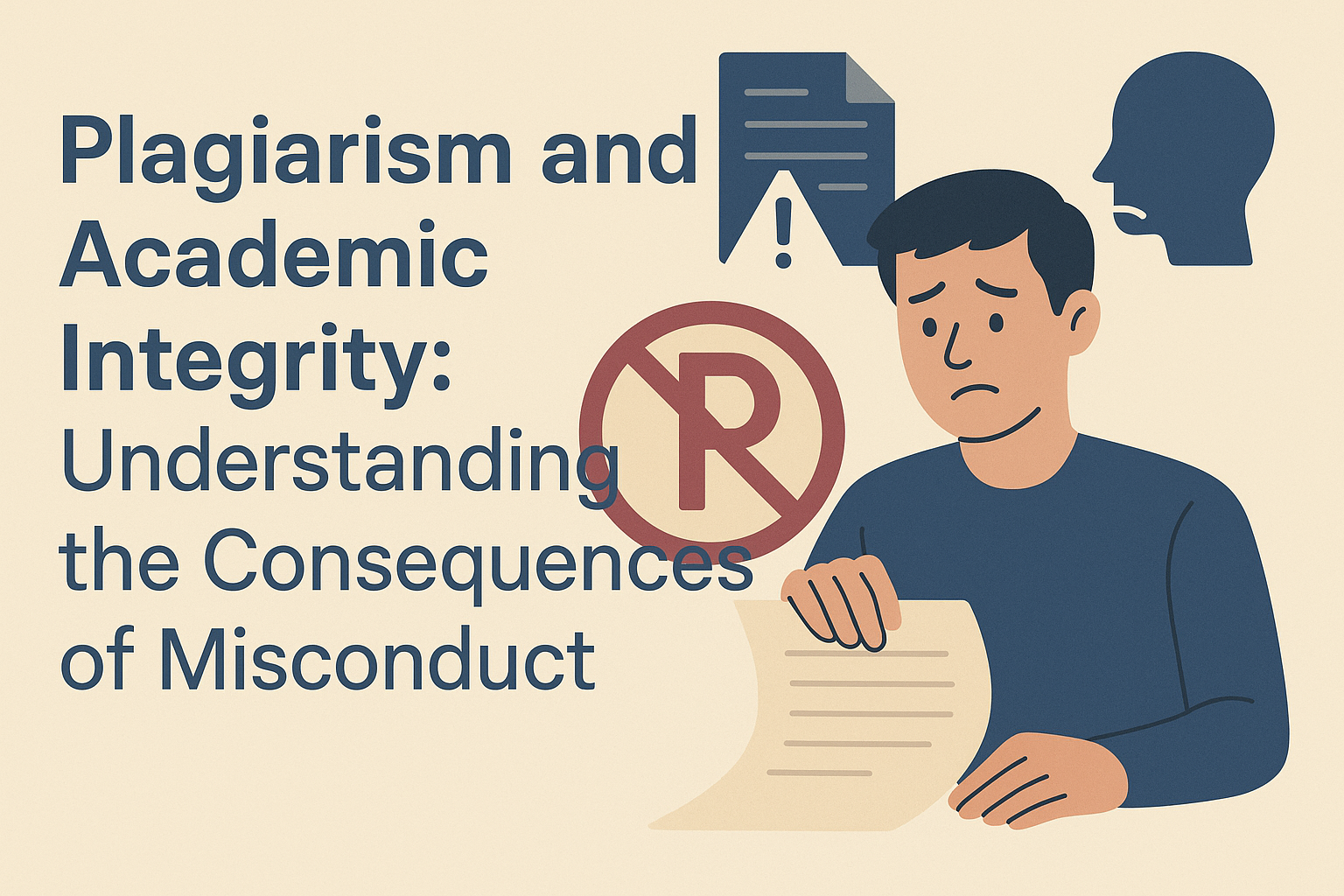
  • Plagiarism and Academic Integrity: Understanding the Consequences of Misconduct

    Plagiarism and Academic Integrity: Understanding the Consequences of Misconduct

    While I was a substitute teacher in K-12, I’ve seen firsthand the devastating effects that plagiarism and academic dishonesty can have on students’ reputations and future opportunities. As we strive to create a culture of integrity within our institutions, it’s essential to understand not only what constitutes plagiarism but also the severe consequences that follow when such misconduct is discovered.

    At its core, plagiarism is the act of passing off someone else’s work as one’s own without proper attribution. This can take many forms, from copying and pasting text from online sources to paraphrasing a colleague’s ideas without credit. In today’s digital age, where information is readily available at our fingertips, it’s become increasingly easy to commit plagiarism unintentionally. However, ignorance of the rules is no excuse for violating them.

    The consequences of plagiarism can be severe, ranging from failing grades and academic probation to expulsion and even lawsuits in extreme cases. But beyond these punitive measures lies a more profound impact: damage to one’s credibility and character. A reputation built on dishonesty can be difficult to repair, and the stain of plagiarism can follow students long after they’ve graduated.

    Academic integrity is not just about avoiding plagiarism; it’s also about upholding the values of honesty, fairness, and respect for others’ intellectual property. It requires a commitment to doing one’s own work, seeking help when needed, and acknowledging the contributions of others. By embracing this culture of integrity, students can build trust with their peers and instructors, foster meaningful relationships, and develop essential skills that will serve them well throughout their academic and professional careers.

    So what can we do to prevent plagiarism and promote academic integrity? First and foremost, educators must model these behaviors ourselves, making it clear through our policies, practices, and actions that we value honesty and original thought. We should also provide students with the tools and resources they need to succeed, including workshops on proper citation and research techniques.

    Furthermore, institutions can implement robust detection systems to identify instances of plagiarism, but these measures alone are insufficient. We must also create an environment where students feel comfortable asking questions, seeking help when needed, and reporting concerns about academic dishonesty without fear of reprisal or judgment.

    Ultimately, preventing plagiarism requires a multifaceted approach that involves educators, administrators, and students working together to promote a culture of integrity. By doing so, we can foster a community built on trust, respect, and intellectual curiosity – one where students feel empowered to take ownership of their work and proud to produce original ideas.

  • Grant Writing Ethics: Ensuring Transparency and Accountability

    Grant Writing Ethics: Ensuring Transparency and Accountability

    As a professional in the field of grant writing, it’s essential to acknowledge the delicate balance between securing funding for valuable projects and maintaining the highest standards of ethics. Transparency and accountability are crucial components of this balance, as they foster trust between organizations, funders, and the communities we serve.

    Ultimately, the key to successful grant writing is not just securing funding but building lasting relationships founded on trust, integrity, and a commitment to serving others.
    Ultimately, the key to successful grant writing is not just securing funding but building lasting relationships founded on trust, integrity, and a commitment to serving others.

    At its core, grant writing is about advocating for the needs of our clients or beneficiaries, whether it’s a non-profit organization, a community group, or an individual in need. We’re not just pitching proposals to secure funding; we’re representing the voices and aspirations of those we aim to help. This responsibility requires us to be meticulous in our research, accurate in our reporting, and honest in our representations.

    One critical aspect of grant writing ethics is transparency regarding potential conflicts of interest. As professionals, we must disclose any relationships or affiliations that could influence our judgment or compromise the integrity of a proposal. This includes not only financial ties but also personal connections or professional partnerships that may impact our objectivity. By being upfront about these potential conflicts, we maintain the trust of funders and stakeholders.

    Another essential element is accountability in managing grant funds once they’re awarded. Grant writers must work closely with project managers, finance teams, and other stakeholders to ensure that expenses are properly documented, invoices are accurately accounted for, and reporting deadlines are met. This level of transparency not only satisfies funder requirements but also enables us to track the effectiveness of our projects and make data-driven decisions for future initiatives.

    Transparency in grant writing extends beyond financial management to include clear communication with stakeholders throughout the project lifecycle. Regular updates on project progress, milestones achieved, and challenges overcome help maintain trust and confidence among funders, community members, and other partners. This transparency also allows us to adapt our strategies as needed, making adjustments that ensure we’re meeting the needs of those we serve.

    In addition to individual accountability, organizations must also prioritize a culture of transparency within their own walls. Grant writing teams should operate with a high level of autonomy, allowing team members to contribute their expertise and insights without fear of reprisal or judgment. This freedom enables us to tackle complex challenges and develop innovative solutions that align with the needs of our clients.

    Maintaining ethics in grant writing requires ongoing education and self-reflection. Professionals must stay current on best practices, research new developments in their field, and engage in regular peer review and critique. By staying vigilant about our own biases and assumptions, we can better anticipate potential pitfalls and develop more effective strategies for promoting transparency and accountability.

    Ultimately, the key to successful grant writing is not just securing funding but building lasting relationships founded on trust, integrity, and a commitment to serving others. By prioritizing ethics, we not only strengthen our reputation as professionals but also foster a culture of transparency that benefits everyone involved in our projects – from funders to community members to the organizations we represent.

    Robert

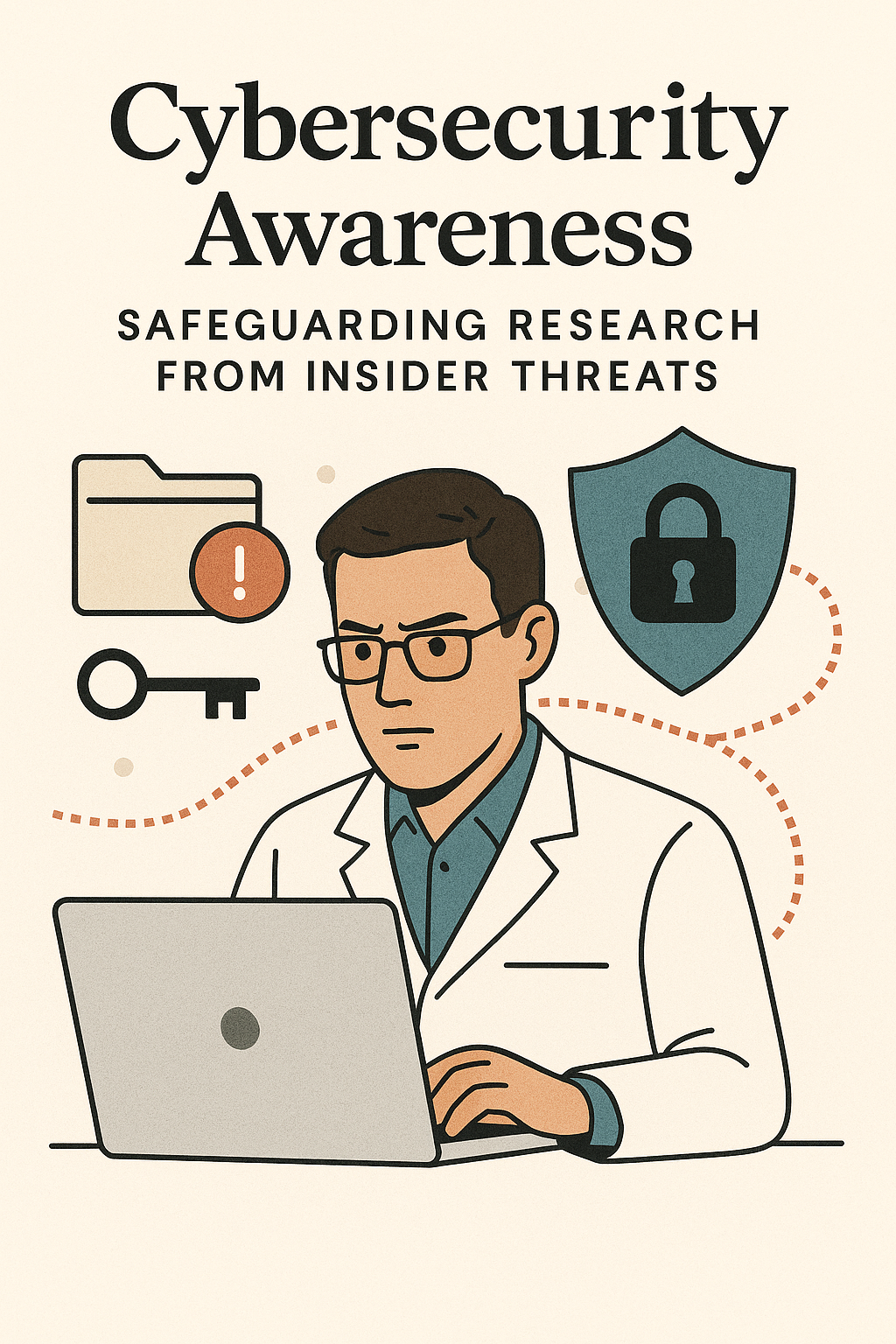
  • Cybersecurity Awareness: Safeguarding Research from Insider Threats

    Cybersecurity Awareness: Safeguarding Research from Insider Threats

    As researchers, we’re all too familiar with the concept of confidentiality, integrity, and availability – the pillars that underpin any secure data handling process. However, there’s a particular threat to these principles that we often overlook, despite its potential for catastrophic consequences: insider threats.

    An insider threat can manifest in many ways, from accidental negligence to deliberate sabotage. In the context of research, an insider threat could compromise sensitive data, disrupt project timelines, or even lead to intellectual property theft. The question is, how do we safeguard our research from these insidious dangers?

    One critical aspect of mitigating insider threats lies in education and awareness. It’s not enough to simply implement technical controls; researchers need to understand the risks associated with their actions. This includes being mindful of sensitive data handling practices, recognizing the importance of access control, and avoiding behaviors that could be exploited by malicious actors.

    When it comes to safeguarding research from insider threats, one key strategy is to adopt a layered approach to security. This involves combining technical controls like encryption and access management with non-technical measures such as employee education and awareness programs. By doing so, we can create a robust defense against insider threats that’s far more effective than relying on any single solution.

    One of the primary challenges in addressing insider threats is striking a balance between security and usability. On one hand, overly restrictive controls can stifle productivity and collaboration; on the other hand, lax policies can leave sensitive data vulnerable to exploitation. By implementing solutions that are both secure and user-friendly, we can minimize the risk of insider threats without compromising our research goals.

    Another essential component in mitigating insider threats is to establish a culture of transparency and accountability within our institutions. This involves fostering an environment where employees feel comfortable reporting concerns or suspicious behavior without fear of retribution. By doing so, we can identify potential issues early on and take proactive steps to address them before they escalate into major incidents.

    In addition to these measures, it’s essential to conduct regular security audits and risk assessments to identify vulnerabilities in our systems and processes. This involves monitoring employee activity, analyzing access patterns, and reviewing data handling practices to ensure compliance with established policies and procedures. By staying vigilant and proactive, we can minimize the likelihood of insider threats and safeguard our research from potential harm.

    While no single solution can completely eliminate the risk of insider threats, a comprehensive approach that combines education, awareness, technical controls, and non-technical measures can significantly reduce this risk. By working together to create a culture of security and accountability within our institutions, we can protect our research from these insidious dangers and continue advancing knowledge with confidence.

    In conclusion, safeguarding our research from insider threats requires a multifaceted approach that addresses both technical and human factors. By prioritizing education, awareness, transparency, and accountability, we can minimize the risk of insider threats and ensure the continued integrity of our research endeavors. As researchers, it’s our responsibility to stay vigilant and proactive in this regard, and by doing so, we can safeguard our work for years to come.

  • The Pursuit of Objectivity in Scientific Discovery

    The Pursuit of Objectivity in Scientific Discovery

    As scientists, we’re constantly striving to advance our understanding of the world around us. But have you ever stopped to think about how we arrive at those groundbreaking discoveries? It’s a process that involves more than just collecting data and crunching numbers – it requires a deep commitment to objectivity.

    Objectivity is the cornerstone of scientific inquiry, allowing us to set aside personal biases and agendas in favor of a clear-eyed examination of the facts. But achieving true objectivity is no easy feat, especially when we’re dealing with complex and nuanced subjects that can be influenced by a multitude of factors. It’s one thing to say you’re approaching a problem from a neutral perspective; it’s quite another to actually do so.

    Many of us have dedicated themselves to exploring the intricacies of objectivity in scientific research. They have seen firsthand how easily assumptions and preconceptions can creep into even the most rigorous studies, skewing results and undermining the validity of conclusions.

    One key challenge that arises when attempting to achieve objectivity is dealing with the inherent subjectivity of human perception. No matter how hard we try to set aside our own biases, it’s impossible to eliminate entirely – at least not without some degree of self-awareness and introspection. This doesn’t mean that scientists should be discouraged from exploring their own perspectives; rather, it highlights the importance of recognizing and managing these influences in a deliberate and systematic way.

    Take, for example, the realm of climate science. Here, researchers are constantly grappling with the complex interplay between human activity and natural phenomena – an interaction that’s inherently difficult to quantify or model accurately. By acknowledging the provisional nature of current knowledge and being transparent about the limitations of their data, scientists can create a foundation for more objective conclusions.

    One approach I advocate for is adopting a ‘both-sides’ perspective in research. This means actively seeking out diverse viewpoints and interpretations before synthesizing findings into a comprehensive whole. It’s not about arriving at some arbitrary midpoint or middle ground; rather, it’s about recognizing that truth often lies in the gray areas between competing theories.

    The pursuit of objectivity is an ongoing process, one that requires continuous effort and reflection from scientists across all disciplines. By embracing this journey – rather than trying to force a destination – we can create a more robust and reliable body of knowledge that truly reflects our understanding of the world.

    In many cases, achieving true objectivity will require significant shifts in how research is conducted and communicated. This may involve rethinking traditional approaches to data collection, analysis, or interpretation; it might also entail changing the way scientists engage with one another – including an increased willingness to question established assumptions and conventional wisdom.

    Ultimately, our pursuit of objectivity should be about more than just arriving at ‘right’ answers; it’s about fostering a culture of rigorous inquiry that values intellectual honesty above all else. By doing so, we can ensure that the discoveries we make today will form a solid foundation for those of tomorrow – a prospect that holds boundless promise for advancing human knowledge and improving our collective understanding of the world around us.

  • The 80/20 Rule: Focusing on What Really Matters in Time Management

    The 80/20 Rule: Focusing on What Really Matters in Time Management

    As someone who’s constantly juggling multiple tasks and responsibilities, it can be easy to get caught up in the idea that we need to do more, be more, and achieve more. But the truth is, most of us are just trying to make the most out of our limited time. This is where the 80/20 rule comes in – a concept that’s been around for decades but still manages to surprise us with its relevance today.

    For those who may not know, the 80/20 rule states that approximately 80% of results come from just 20% of efforts. Sounds simple enough, right? But what it really means is that we tend to focus on a multitude of tasks, only to find out that most of them aren’t producing the desired outcome. We’re spreading ourselves too thin by trying to tackle everything at once, and as a result, our productivity takes a hit.

    But here’s the catch: some tasks are more important than others. In fact, most tasks can be categorized into three main groups – essential, necessary, and nice-to-haves. Essential tasks are those that absolutely must be done in order to meet your core objectives. Necessary tasks are those that support these essential ones but aren’t as critical. And then there are the nice-to-haves – tasks that might bring some value, but aren’t crucial to your goals.

    The 80/20 rule suggests that you should focus on the top 20% of tasks that drive 80% of results. Sounds easy enough in theory, but it’s a challenge most of us face when trying to prioritize. The key is to identify these high-impact activities and eliminate or delegate everything else. This doesn’t mean getting rid of all nice-to-haves entirely; rather, you should be more intentional about where you invest your time.

    I recall a friend who was struggling with her workload. She was consistently working 12-hour days but still wasn’t meeting expectations. After digging deeper, we found that she was spending way too much time on tasks that weren’t driving significant results. By cutting back on unnecessary tasks and delegating others, she managed to free up two hours a day for more impactful activities.

    This isn’t just about increasing productivity; it’s also about achieving better work-life balance. When you focus on what truly matters, you’re able to prioritize self-care and relationships, which in turn enhances your overall well-being.

    Implementing the 80/20 rule requires discipline, but the payoff is immense. By identifying and concentrating on high-impact tasks, you’ll not only achieve more but also reduce stress and increase job satisfaction. It’s time to revolutionize your approach to time management by focusing on what really matters.

  • Managing Lab Resources: Budgeting Time and Materials

    Managing Lab Resources: Budgeting Time and Materials

    As a scientist, you’re likely no stranger to the complexities of managing lab resources. From allocating time and personnel to tracking expenses and inventory, it’s a delicate balancing act that requires careful attention to detail. In this article, we’ll explore some practical strategies for budgeting your lab’s time and materials, helping you optimize efficiency and minimize waste.

    First and foremost, let’s talk about the importance of setting clear goals and priorities. Without a clear understanding of what needs to be accomplished and how resources will be allocated, it’s easy to get bogged down in unnecessary tasks or spend too much on equipment that won’t see regular use. Take some time to sit down with your team and discuss the lab’s objectives, identifying key projects and initiatives that require focused attention.

    One effective way to manage lab resources is by implementing a centralized scheduling system. This can be as simple as using a shared calendar or project management tool to track tasks, allocate personnel, and set deadlines. By keeping everyone on the same page, you’ll avoid double-booking equipment or assigning too many people to a single task. Consider also setting up regular team meetings to review progress, address any issues that arise, and make adjustments as needed.

    Of course, no discussion of lab resource management would be complete without addressing the elephant in the room: budgeting for materials and supplies. This can be a daunting task, especially when trying to balance short-term needs with long-term sustainability goals. Here are a few strategies for making the most of your lab’s financial resources:

    • Conduct regular inventory audits to ensure you’re not overstocking or under utilizing equipment and consumables.
    • Consider implementing a just-in-time ordering system, where supplies are procured only as needed rather than in bulk.
    • Look into cost-saving initiatives like refurbished or second-hand equipment, which can provide significant savings without compromising performance.

    Another often-overlooked aspect of lab resource management is the value of employee time. When personnel are stuck on routine tasks or waiting for equipment to become available, productivity suffers and morale plummets. Consider implementing flexible scheduling arrangements that allow team members to work on high-priority projects during peak periods, while less critical tasks are delegated to off-peak times.

    Effective resource management also requires a willingness to adapt and adjust course as circumstances change. Don’t be afraid to reassign personnel or repurpose equipment when priorities shift or new opportunities arise. By staying agile and responsive to changing needs, you’ll maintain a lean, efficient operation that can pivot quickly in response to emerging challenges or breakthroughs.

    Finally, don’t underestimate the importance of collaboration and communication in managing lab resources. When team members are able to share knowledge, expertise, and resources, everyone benefits from improved efficiency, reduced waste, and enhanced innovation. Consider setting up regular interdepartmental meetings or workshops to foster knowledge sharing, explore new ideas, and build partnerships across disciplines.

    By implementing these strategies for budgeting time and materials, you’ll be well on your way to creating a lean, efficient lab operation that’s optimized for success. Remember to stay flexible, adapt to changing needs, and always prioritize clear communication and collaboration among team members. With careful planning, attention to detail, and a willingness to innovate, you’ll be able to manage your lab resources with confidence and precision, driving breakthroughs and advancements in your field.

  • Building Routines: How Consistency Can Improve Your Time Management Skills

    Building Routines: How Consistency Can Improve Your Time Management Skills

    Let’s face it – life is chaotic. Between work commitments, family responsibilities, and personal aspirations, there often seems to be no end to the tasks that vie for our precious time and attention. Amidst this whirlwind, mastering time management is crucial for maintaining a balanced life. One of the most powerful tools at your disposal for this purpose is the art of building routines. The consistent application of routines can revolutionize the way you manage your time, turning what was once a jumbled schedule into an orchestrated symphony of productivity.

    Consistency is not just a nice idea; it’s the bedrock of effective time management. When you establish routines, you create predictable patterns in your daily life. These patterns give structure to your day and help you allocate your time more efficiently. By doing the same tasks at the same times every day, you eliminate decision fatigue— the mental exhaustion that comes from having to make too many choices. This, in turn, reduces stress and allows for clearer thinking about what truly matters.

    For instance, imagine starting your day with a 30-minute workout routine. Doing so not only provides immediate health benefits but also sets a positive tone for the rest of the day. By dedicating this time consistently, you’re less likely to procrastinate or get sidetracked by less important activities. This habit becomes automatic, freeing up mental bandwidth to focus on other, more complex tasks.

    Similarly, if you struggle with writing reports, establishing a specific time each day solely for that task can make it feel less daunting. By committing a block of time – say, 2 hours after work every Monday through Thursday – you’re training your brain to be more efficient during those periods. The routine signals to your mind that it’s time to concentrate and get down to business, bypassing the usual distractions and preoccupations.

    Moreover, routines can help you prioritize. When you consistently tackle high-priority tasks early in the day, you’re setting yourself up for success. These tasks often require the most mental energy and focus, and completing them when you’re freshest sets a productive pace that carries through the rest of your day. By the time lower-priority items come around, you’re already ticking off the more significant ones, ensuring they don’t loom over you as the day progresses.

    Consistency isn’t just about sticking to a schedule; it’s also about being adaptable when necessary. Life throws curve balls – urgent meetings, family emergencies, or sudden health issues. In these instances, your routine might need to flex. The key is to maintain the integrity of the structure while accommodating the unexpected. This means having contingency plans or being willing to rearrange certain tasks without derailing your entire day.

    Consider a flexible morning routine. Instead of rigidly adhering to a specific start time that could be disrupted by an early meeting, plan for an evening wind-down that ensures a restful night’s sleep. Begin the next day with a short meditation session or a quick review of your goals, allowing you to stay grounded and focused despite any early disruptions.

    In conclusion, building routines is a powerful way to enhance your time management skills. Consistency provides the stability needed to navigate life’s uncertainties, giving you the clarity and efficiency to accomplish more within the same 24 hours. By treating routine as an indispensable ally in your quest for productivity, you’ll find yourself not only managing time better but enjoying the peace of mind that comes with knowing you’re on top of things. So embrace the regularity, and watch as your time management skills soar to new heights. With just a little commitment each day, you can turn your time into an asset rather than a liability.

  • Time Blocking: Maximizing Productivity with Structured Scheduling

    Time Blocking: Maximizing Productivity with Structured Scheduling

    Hey there, fellow productivity enthusiasts! Ever felt like there just aren’t enough hours in the day to get everything done? Worry no more because we’ve got a solution that might just revolutionize your approach to getting things done: time blocking. Let’s dive right into how structured scheduling can be your new best friend when it comes to maximizing productivity.

    It’s about creating space for meaningful work and personal time, ensuring that you’re not just busy but effective. Try it out and see the difference for yourself.
    It’s about creating space for meaningful work and personal time, ensuring that you’re not just busy but effective. Try it out and see the difference for yourself.

    Picture this: your calendar isn’t just a list of events and deadlines—it’s a finely tuned machine, strategically organized to make every minute count. Time blocking is the art of dividing your day into chunks of time, each dedicated to specific tasks. This method allows you to take control of your day, reducing stress and increasing efficiency.

    But why is time blocking so effective? It all comes down to how our brains work. We’re wired to focus on one thing at a time, which means when we switch tasks too frequently, we lose precious time getting back into the groove. By blocking out certain hours for specific tasks, you minimize these disruptions and create a flow that helps you maintain your focus and productivity.

    Here’s how you can start implementing time blocking in your daily routine:

    1. Set Clear Goals: Know what you want to achieve each day. Without clear goals, your time blocks might end up being unproductive. Start with your top priorities and then map out how you’ll tackle them throughout the day.
    2. Plan Wisely: Allocate time blocks for various tasks—work, personal errands, relaxation, and hobbies. This might mean waking up earlier or staying late, but it’s worth it to ensure you have blocks of uninterrupted time for each activity.
    3. Stick to Your Schedule: Once you’ve planned your day, stick to it! It takes discipline, but over time, this habit will become second nature. Remember, flexibility is key—if an unforeseen event pops up, adjust your schedule accordingly.
    4. Reserve Time for Flexibility: Although rigid planning is the backbone of time blocking, keep some segments unassigned. This buffer allows you to handle unexpected tasks without disrupting your entire day’s structure.
    5. Reflect and Adjust: At the end of each day, reflect on how your time blocks worked out. Did you accomplish what you set out to do? If not, why not? Use this feedback to adjust your schedule for the next day.

    By now, you might be thinking, “Isn’t this just another ‘to-do’ list?” But fear not, it’s much more than that. Time blocking is about commitment to each block of time and letting go of multitasking to embrace deep work—those moments when you’re fully immersed in what you’re doing. It’s about giving every task the attention it deserves.

    Moreover, time blocking can help you understand how long tasks truly take, helping to eliminate procrastination. You’ll see that some tasks you thought would take hours can actually be completed in much less time, freeing up your schedule for more productive activities.

    So, are you ready to schedule your way to productivity nirvana? With time blocking, you have the power to reclaim your day from the chaos of constant interruptions and meetings. It’s about creating space for meaningful work and personal time, ensuring that you’re not just busy but effective.

    Try it out and see the difference for yourself.

  • Aligning Your Values with Your Schedule: A Holistic Approach to Time Management

    Aligning Your Values with Your Schedule: A Holistic Approach to Time Management

    Time management has long been a mantra for productivity, yet many of us struggle to harmonize our schedules with our values. The key to a contented life is to ensure that what we do daily reflects our core beliefs and aspirations. Let’s explore a method that intertwines your values with your time, creating a schedule that’s not just efficient but also meaningful.

    Imagine this: you wake up each morning feeling inspired because your day is a perfect blend of tasks that line up with what truly matters to you. This isn’t about squeezing in a few minutes for charity work here and there; it’s about structuring your life so that every moment aligns with your principles. It’s about creating a schedule where attending a child’s soccer game on a Friday afternoon feels as essential as the client meeting you have scheduled at 9 AM.

    The first step is self-assessment. Take some quiet time to reflect on what you truly value. Is it spending quality time with family? Is it giving back to your community? Perhaps it’s learning something new each day or maintaining physical health? Write these down and prioritize them in order of importance. Remember, this list should be specific enough that each item represents a clear action.

    Once your values are crystalized, the next step is to map out your week and then your day. Block out time for these value-driven activities as if they were mandatory appointments. Be realistic; if your schedule already feels packed, you might need to re-evaluate your commitments and let go of activities that don’t serve your values. This isn’t about cutting out leisure – it’s about ensuring leisure is on your terms.

    For instance, if family time is a priority, ensure you have several evenings free for dinner and quality time with loved ones. If contributing to your community matters, find regular slots in your calendar for volunteering or participating in group activities. The goal is to make these value-driven actions second nature, integrated into the fabric of your everyday life.

    As you allocate time to these values, you’ll notice a positive shift in your daily experience. Tasks that once felt like obligations become opportunities to live according to what you believe in. This approach nurtures a sense of fulfillment and purpose that no time management strategy can provide in isolation.

    Additionally, be prepared to adjust your schedule as life throws curveballs at you. Flexibility within structure is key. Perhaps a work project demands more time than anticipated – this doesn’t mean you have to sacrifice your values. Instead, reassess and redistribute your time accordingly while ensuring the core value activities remain intact.

    Finally, review and refine your schedule regularly. Values can evolve as we grow and experience new things. What once resonated deeply may shift over time. By periodically revisiting your value-driven schedule, you can ensure it remains a true reflection of who you are at any given moment.

    In conclusion, aligning your values with your schedule is not just about being busy—it’s about being purposeful. It’s about recognizing that every hour in the day can be an expression of what truly matters to us. When we consciously choose to organize our time around our core beliefs and passions, we pave the way for a life that is rich with meaning and joy. So, take the initiative today, and let’s turn our schedules into a canvas for painting the picture of our values.

  • Time Management for Students: Strategies for Academic Success

    Time Management for Students: Strategies for Academic Success

    Hey there, aspiring scholars! Here are some gold nuggets to help you conquer the mountainous pile of assignments and exams looming over your heads. Let’s dive into strategies that will revolutionize how you approach your academic workload.

    First off, let’s address the elephant in the room: Procrastination. We’ve all been there, staring at a blank screen while Instagram calls our name. The secret? Start with the hardest task first thing in the morning. You’ll tackle it when your brain is fresh and before it starts to feel like wading through molasses. Plus, crossing it off the list will give you that satisfying rush that makes everything else seem a breeze.

    Next, set yourself up for success by creating a study schedule. This isn’t about chaining yourself to a desk from dawn till dusk; it’s about setting aside specific times each day when you’ll focus on your studies. Think of it as carving out mental real estate. Your brain will get used to the rhythm and make studying almost second nature.

    Now, let’s talk about creating a productive workspace. Keep it tidy and free from distractions—no piles of dirty laundry or buzzing phones. A clean environment can help keep your mind focused. Also, consider lighting. Natural light is ideal, but if you’re working at night, soft, warm lighting can help prevent eye strain.

    Another gem: Use a planner or digital calendar to jot down deadlines and important tasks. This way, you won’t find yourself scrambling at the eleventh hour. Allocate time for each task and stick to your schedule. It’s like laying out a roadmap to your academic achievements. And don’t forget to color code! It adds a dash of fun to organization.

    Breaks are crucial too. Think of your brain like a high-performance car; it needs time to cool down and recharge after driving hard. Take short breaks between study sessions, use techniques like the Pomodoro Technique (25 minutes of work followed by a 5-minute break), and you’ll find that your productivity soars.

    Moreover, harness the power of technology—there are apps galore designed to help manage time wisely. Whether it’s for blocking distracting websites or reminding you to take breaks, these tools can be your best allies.

    As you incorporate these strategies into your academic life, remember to be flexible. Things happen. Plans change. What’s important is that you adapt and keep moving forward. Being resilient in the face of unexpected challenges will serve you well beyond the classroom.

    Finally, don’t forget to prioritize self-care. Getting enough sleep, eating well, and staying active are not luxuries; they’re necessities for a sharp mind and a stress-free life. You can’t pour from an empty cup, so fill yours with nutritious treats and quality rest.

    In summing up, mastering time management is about taking control of your academic journey, setting realistic goals, and making every moment count. By embracing these strategies, you’ll find yourself soaring towards the top of your class, ready to tackle any challenge that comes your way. Good luck, student warriors! Now go conquer those assignments.